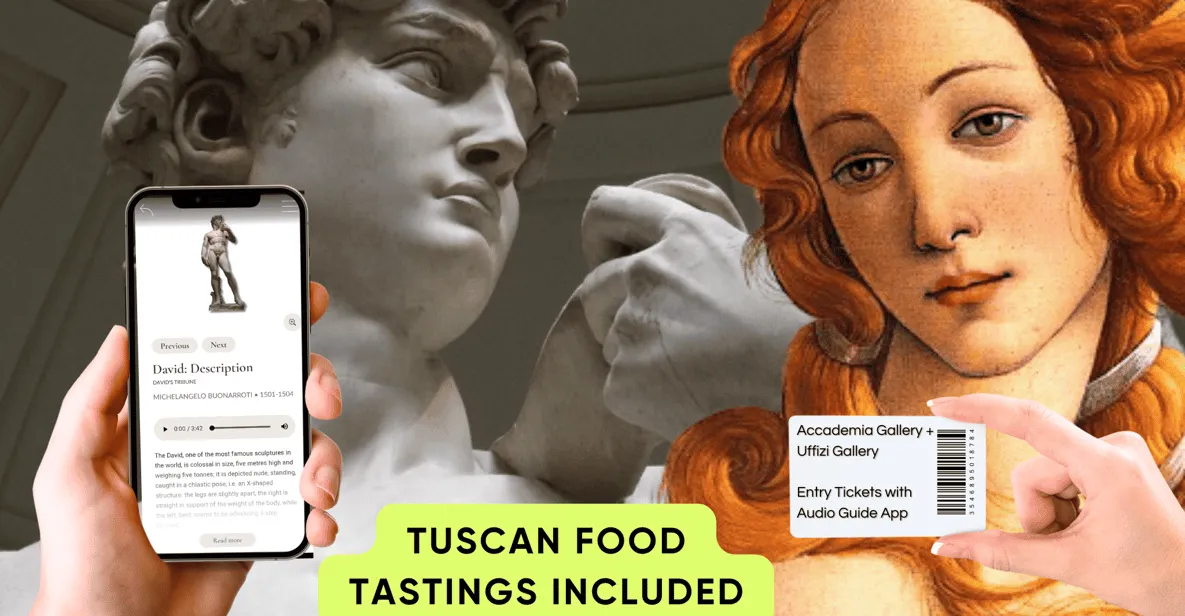
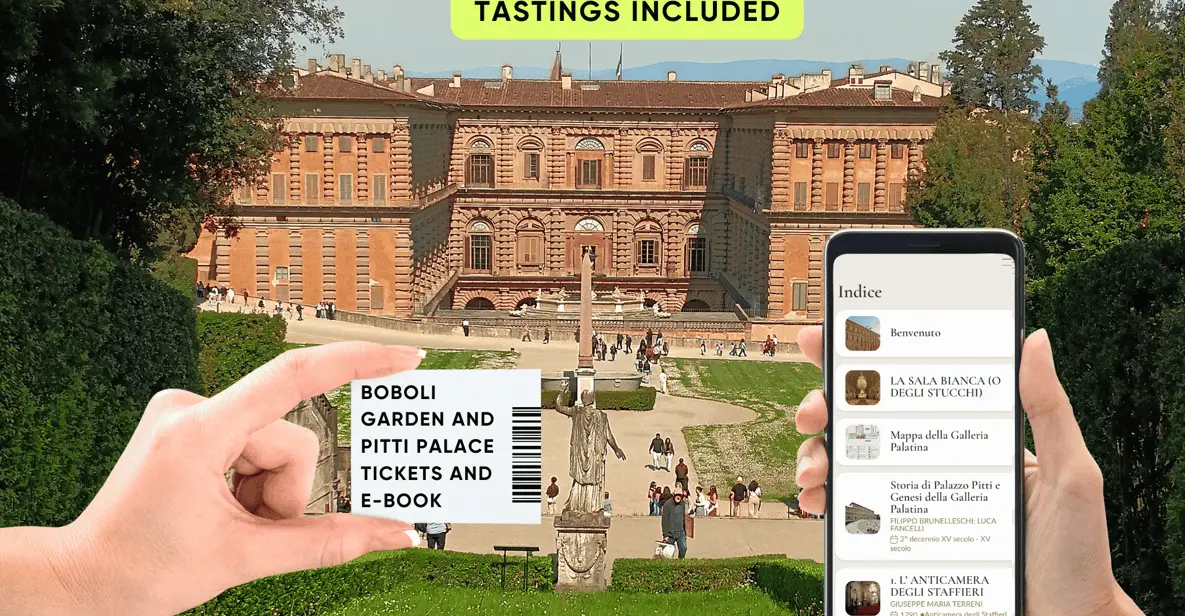
from $136 Museum Pass: David, Uffizi, Pitti Palace & Gardens
- David, Uffizi & Pitti
- Boboli Gardens included
- Least planning needed
Michelangelo's David, Botticelli's Venus and Brunelleschi's dome sit within twenty minutes of each other, and the queues outside them are legendary. This guide sorts the museums in Florence, Italy by theme, with hours, ticket prices and the slots that sell out first.
Florence invented the museum as we know it. When the last Medici heir died in 1743 she willed the family's entire collection to the city on the condition that it never leave, which is why a town of 360,000 people holds one of the densest concentrations of Renaissance art on earth. What museums are in Florence, Italy is therefore a shorter question than which ones you can realistically fit into your days, and this guide sorts them into eight themes so you can pick by what you actually want to see rather than working down a list.
Each section below covers where a museum sits, when it opens, what a ticket costs, what is genuinely worth finding inside, and the tickets and museum tours in Florence, Italy worth booking ahead. Two things to know before you plan anything else. Almost every state museum here closes on Mondays, including the Uffizi and the Accademia, so a Monday arrival needs a different plan. And the two headline galleries run on timed entry that routinely sells out days ahead between April and October, so if you only book one thing before you fly, book David.
Hours, prices and closing days on this page were last checked in July 2026. Florentine museums shift their schedules for exhibitions and holidays more than most, so confirm on the official site before a special trip.
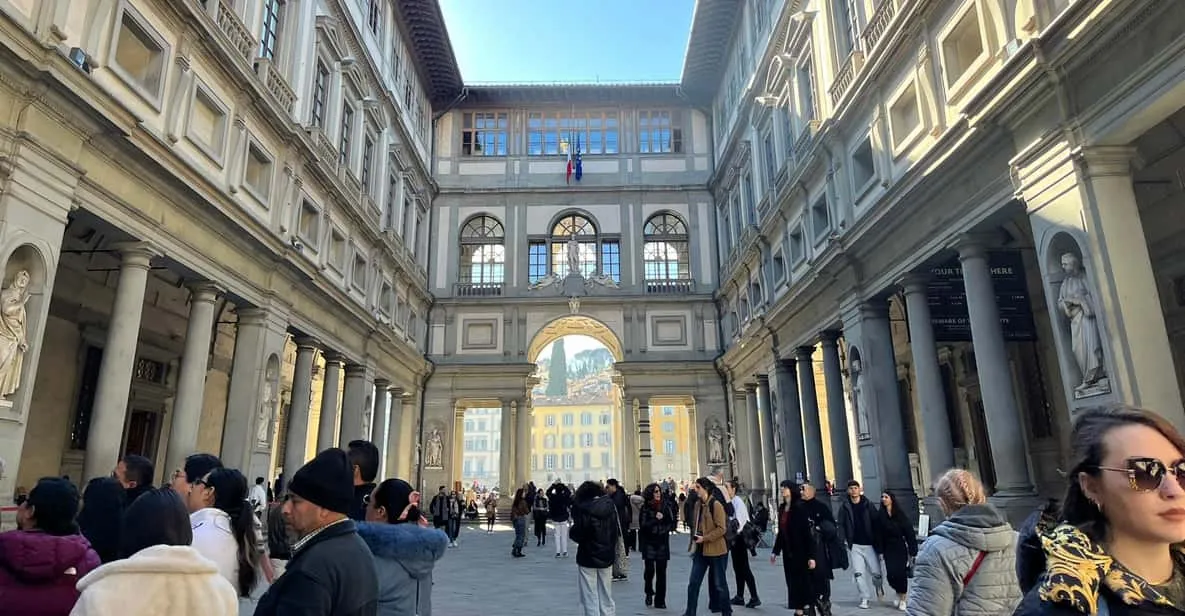
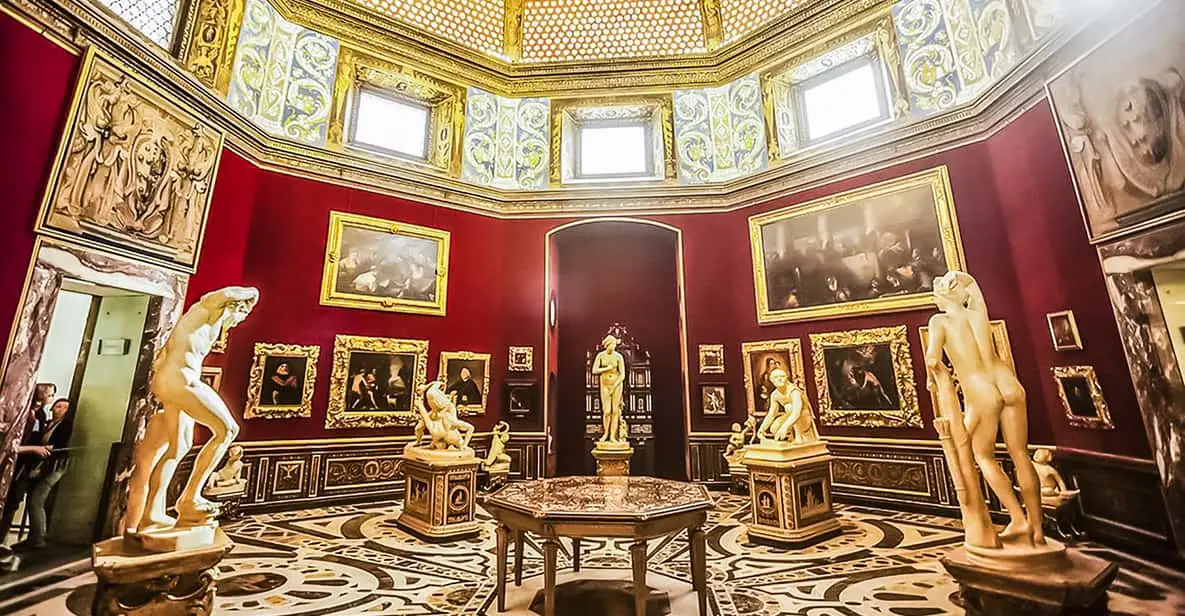
The Uffizi Gallery — the Medici collection in the building Vasari raised for them, holding Botticelli's Birth of Venus and the finest run of Renaissance painting anywhere.
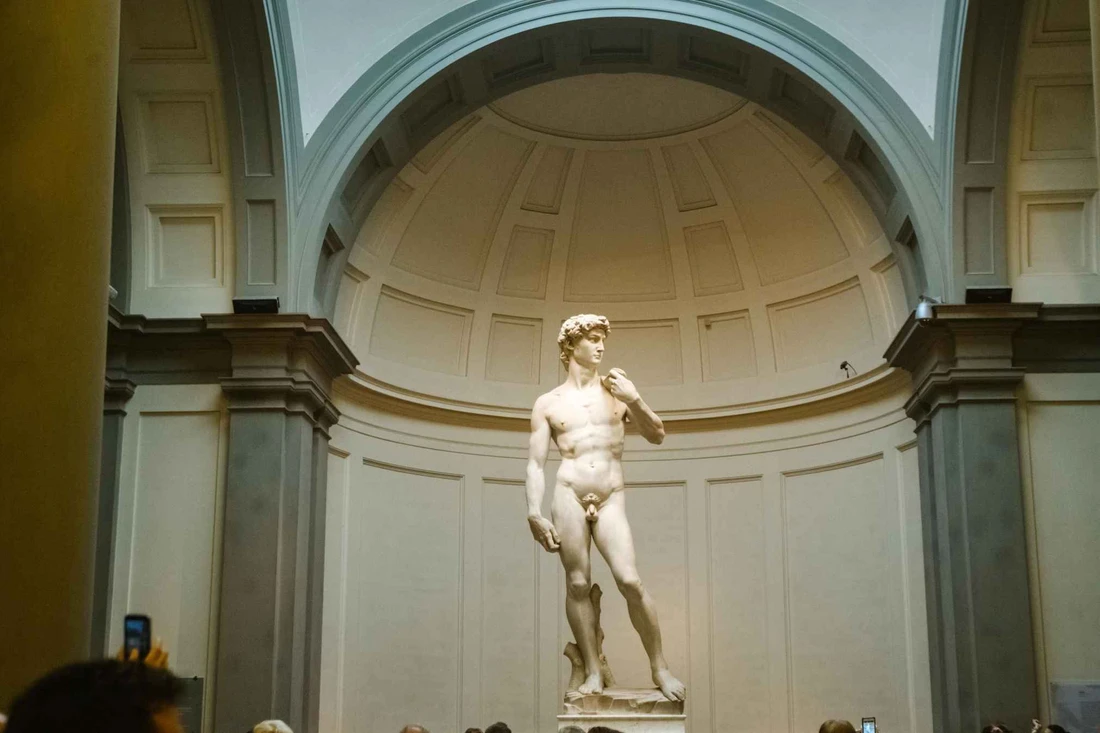
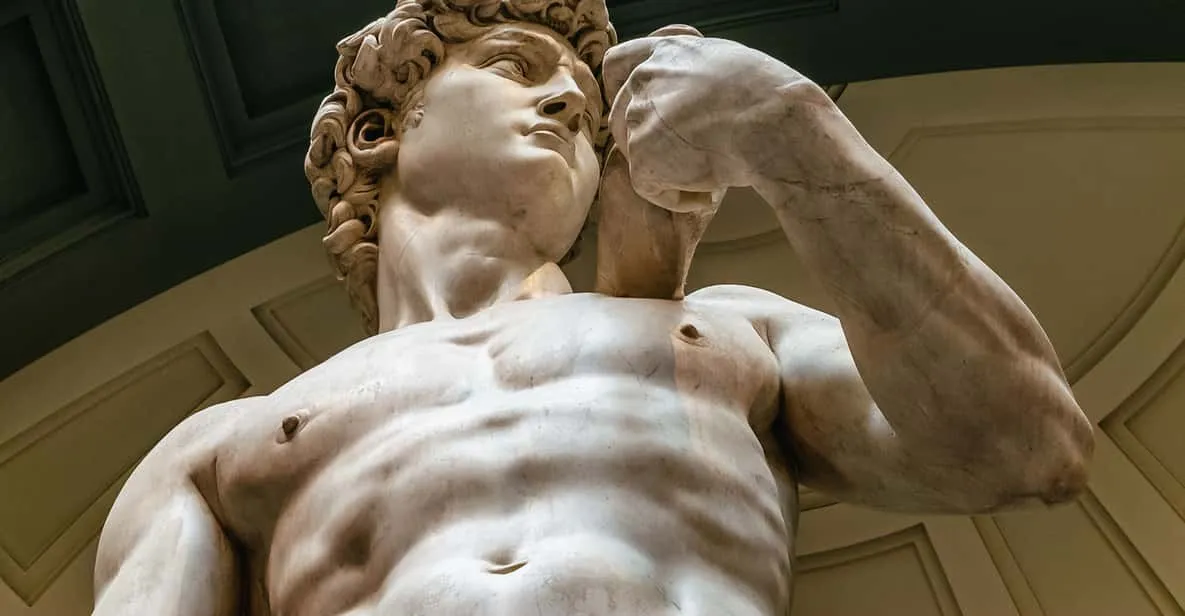
The Accademia Gallery — David is the reason most people come to Florence, and ninety minutes here is the least regrettable ticket in the city.
The Bargello — Donatello's bronze David, Michelangelo's Bacchus and the panels that launched the Renaissance, in a museum most visitors never open the door of.
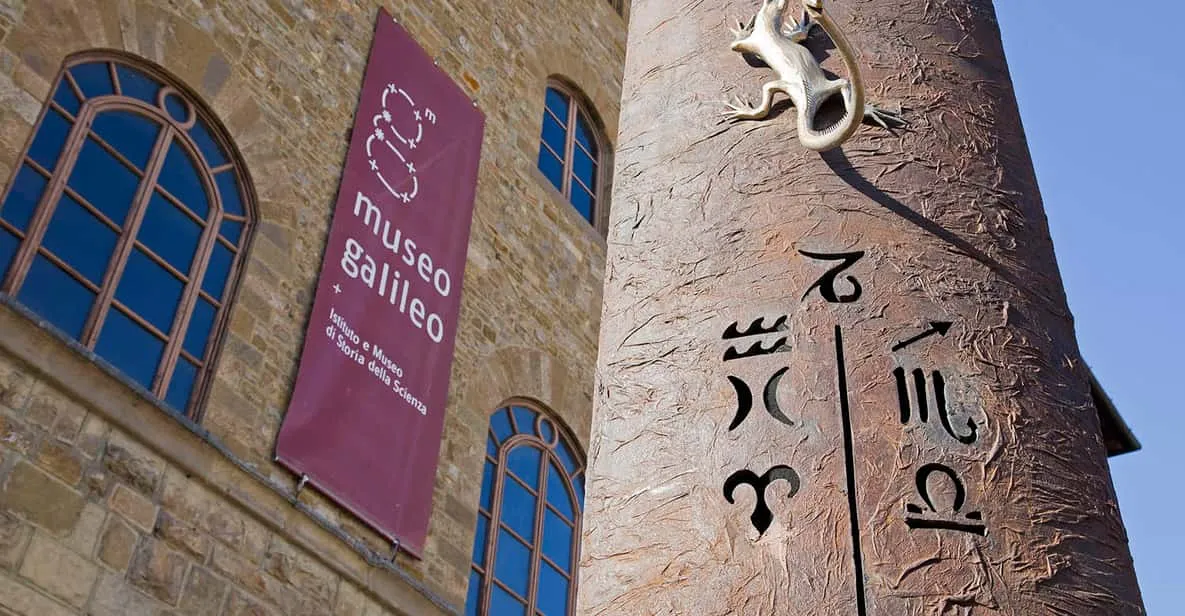
Museo Galileo — the Medici science collection with Galileo's own telescopes, next door to the Uffizi and almost always empty.
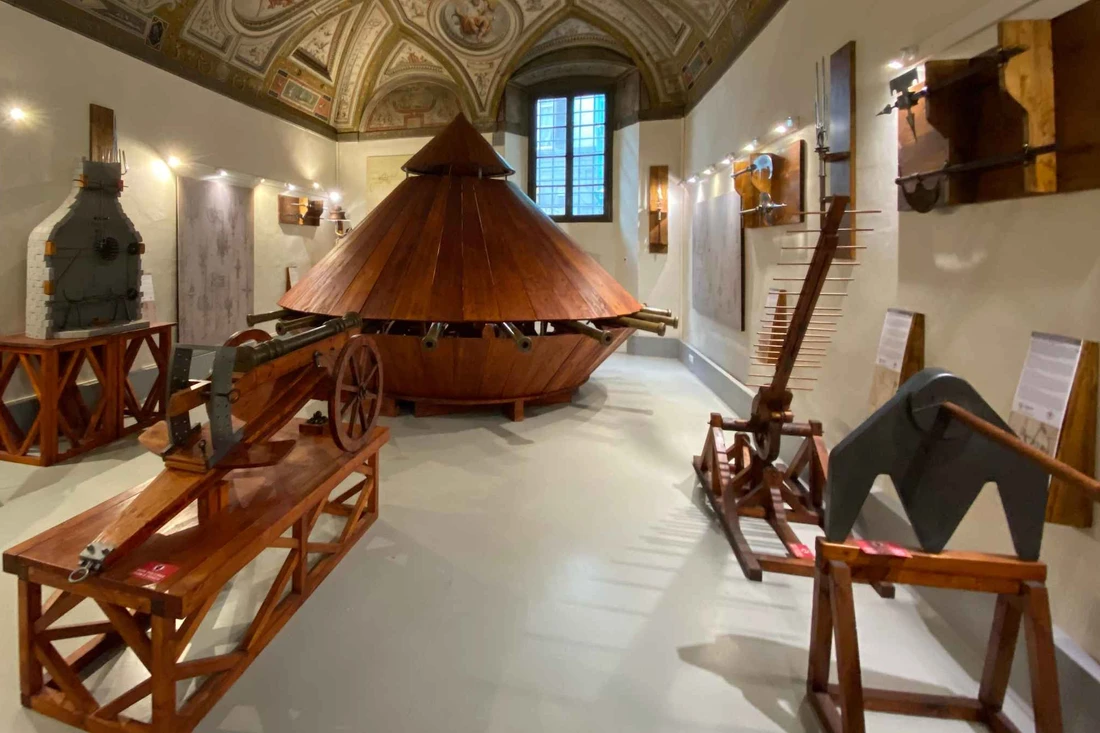
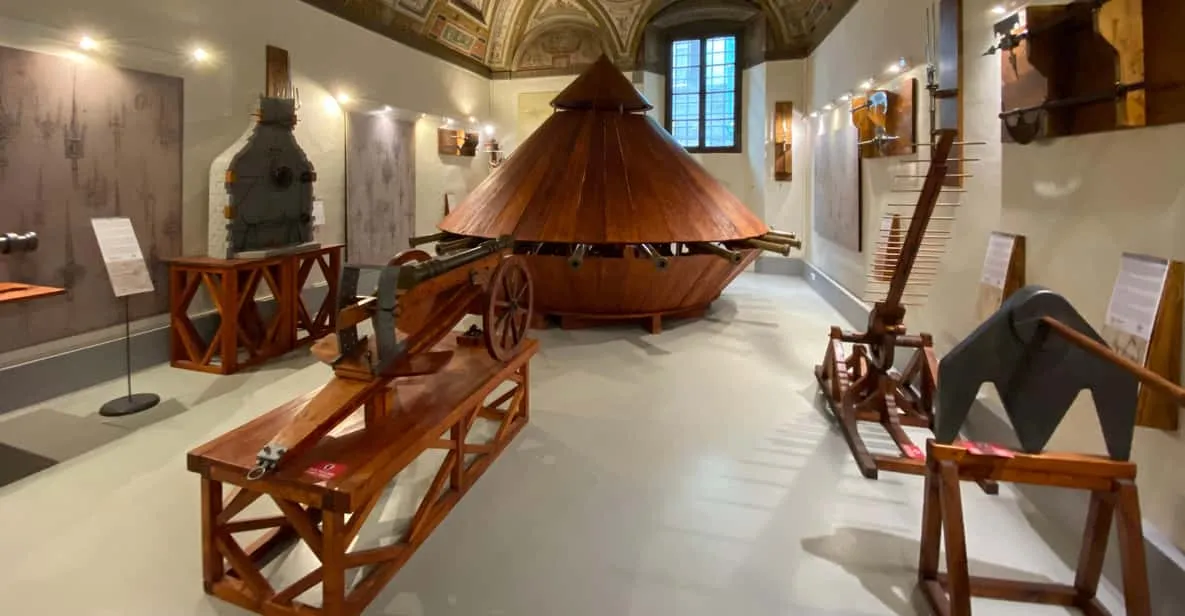
The Leonardo Interactive Museum — full-size machines from his notebooks that children are meant to touch, crank and set moving.
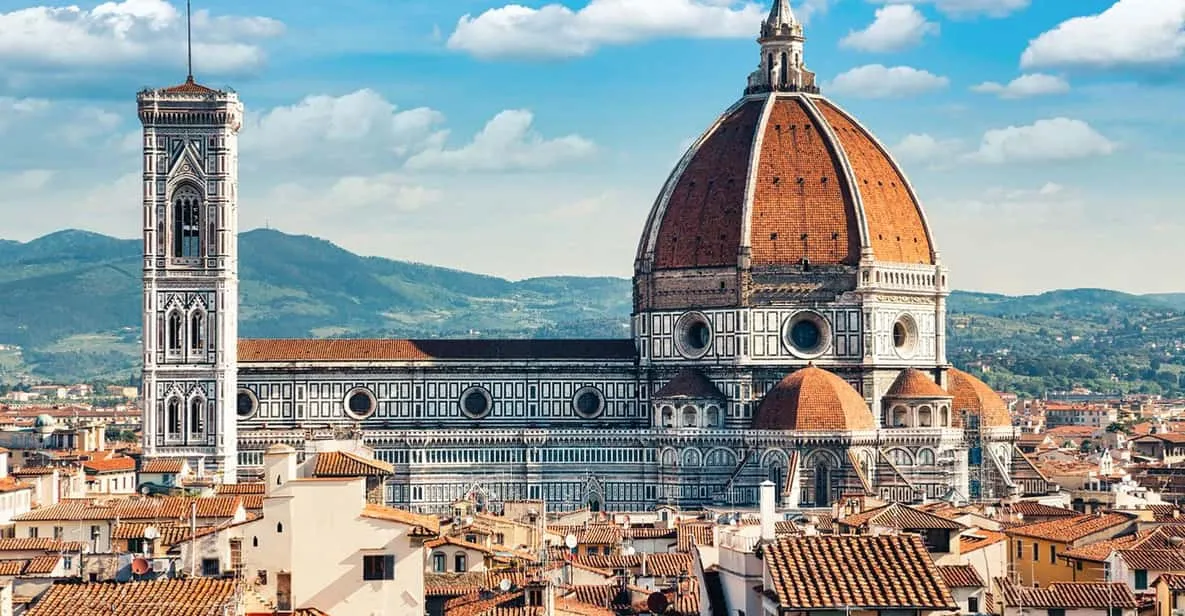
Brunelleschi's Dome — 463 steps between the two shells, past Vasari's Last Judgment, onto the terrace above the rooftops.
Short on time? These are the top museums in Florence, Italy, ranked, each with a one-line case and a link to its full section. The best museum in Florence, Italy is the Uffizi on almost any measure, and the nine that follow it are ordered by what we would give up last. If you want the top 5 museums in Florence, Italy and nothing more, stop after the Bargello at number five — those alone cover the Renaissance from painting to sculpture to engineering.
The essentials for the most famous museums in Florence, Italy, side by side. The two headline museums in Florence, Italy — Uffizi and Accademia — run on timed entry that sells out first, so book those ahead; the smaller museums you can usually walk into. Prices below are the booked ticket including reservation fees, which is what you will actually pay — the door price is lower but assumes you get in.
Use this as your working list of museums in Florence, Italy, and buy tickets for museums in Florence, Italy in this order.
| Museum | Best for | Area | Time needed | Closed | Ticket | Our take |
|---|---|---|---|---|---|---|
| Uffizi Gallery | Renaissance painting | Signoria | 2.5–3 h | Mon | $31 · Check Availability | Book the first slot of the day. Three hours is the honest minimum and most people underestimate it. |
| Accademia Gallery | Michelangelo's David | San Marco | 1–1.5 h | Mon | $33 · Check Availability | Small museum, one enormous reason to come. Never queue for this — the wait routinely hits an hour. |
| Brunelleschi's Dome | The climb & the view | Duomo | 1 h | Sun (climb) | $53 · Check Availability | Book weeks ahead. 463 narrow steps, no lift, and worth every one of them. |
| Palazzo Vecchio | Medici power & frescoes | Signoria | 1.5–2 h | Open daily | $37 · Check Availability | The best Monday option in the city, since it stays open when the state museums shut. |
| Bargello Museum | Renaissance sculpture | Signoria | 1.5 h | Some Mon | $21 · Check Availability | The connoisseur's pick. Donatello's David alone justifies it, and you may have the room to yourself. |
| Pitti Palace & Boboli | Raphael & gardens | Oltrarno | 3 h | Mon | $40 · Check Availability | Vast. Do the Palatina and the gardens, skip the rest, and give it a full afternoon. |
| Medici Chapels | Michelangelo sculpture | San Lorenzo | 1 h | Some Mon/Sun | $20 · Check Availability | Underrated and quick. The New Sacristy is Michelangelo doing architecture and sculpture at once. |
| Museo dell'Opera del Duomo | Duomo originals | Duomo | 1.5 h | Open daily | $39 · Check Availability | The best museum almost nobody visits. Air-conditioned, and the real Gates of Paradise are here. |
| Museo Galileo | Science & instruments | Signoria | 1–1.5 h | Open daily | $20 · Check Availability | Beside the Uffizi and a fraction as busy. Perfect antidote after three hours of Madonnas. |
| Santa Maria Novella | Frescoes & perspective | Station | 1 h | Open daily | $18 · Check Availability | Masaccio's Trinity is a genuine turning point in Western art, and the crowd walks past it. |
| Leonardo Interactive Museum | Kids & inventions | Duomo | 1 h | Open daily | $11 · Check Availability | The cheapest ticket here and the one children remember. Everything is meant to be touched. |
| Archaeological Museum | Etruscan & Egyptian | San Marco | 1.5–2 h | Mon | €8 door · Check Availability | The Chimera of Arezzo is one of the finest bronzes to survive antiquity. Nearly always empty. Walk up and pay the €8 at the door unless you want the guide. |
Florence sells three overlapping options and only one of them suits most trips. The Firenze Card is the official city pass: 72 hours, dozens of museums, one entry each, around €85 ($108 booked). It is the only pass that also covers the Duomo complex, and it skips the reservation step at the Uffizi and the Accademia. The catch is arithmetic — at that price you need roughly five or six paid museums over three days to break even, which means a genuinely museum-heavy trip and the stamina to match. Check Availability
The combined tickets are the sane middle ground. The David, Uffizi and Pitti pass covers the three names most people actually come for and needs no planning at all, while the five-day pass adds Boboli and seven further attractions for less money over a longer window. And if you are visiting two museums, no pass wins — just book the two tickets.
One quirk worth knowing: the Duomo complex sits outside the state museum system entirely. Its own Brunelleschi Pass (around €30) is the only way to climb the dome, and no state pass or combined ticket includes it.
| Museum or sight | Door ticket | Covered by a pass? |
|---|---|---|
| Uffizi Gallery | €25 | Yes — Firenze Card & combined tickets |
| Accademia Gallery (David) | €16 | Yes — Firenze Card & combined tickets |
| Pitti Palace | €16 | Yes — Firenze Card & combined tickets |
| Boboli Gardens | €10 | Yes — Firenze Card & combined tickets |
| Bargello Museum | €10 | Yes — Firenze Card |
| Medici Chapels | €9 | Yes — Firenze Card |
| Palazzo Vecchio | €12.50 | Yes — Firenze Card |
| Brunelleschi's Dome & Duomo museums | €30 | Firenze Card only — not the state combos |
| Gucci Garden / Ferragamo / Stibbert | €8–€9 | No — privately run, pay at the door |
The three options compared above, bookable here. The combined ticket suits most trips; the Firenze Card only pays off on a museum-heavy three days.
from $136
from $79
from $108 The single most useful fact about museum hours in Florence, Italy is that Monday is the problem. Italy's state museums — the Uffizi, the Accademia, Pitti, Boboli and the Archaeological Museum among them — all close on Mondays, which catches out anyone arriving for a long weekend. Sundays are the opposite: yes, museums are open on Sunday in Florence, Italy, and the state ones keep full Sunday hours, so a Sunday is one of the better museum days of the week. The exception is the Duomo, where the cathedral closes to visitors for Sunday mass and the dome climb does not run.
A second quirk: several museums keep irregular monthly closures rather than a fixed weekly day. The Medici Chapels and the Bargello rotate their closed Mondays and Sundays through the month, so check the date rather than the day.
| Museum | Open | Closed |
|---|---|---|
| Uffizi Gallery | Tue–Sun, 8:15–18:30 (last entry 17:30) | Mondays, 1 January, 25 December |
| Accademia Gallery | Tue–Sun, 8:15–18:50 | Mondays |
| Pitti Palace & Boboli Gardens | Tue–Sun, from 8:15 (Boboli closes earlier in winter) | Mondays |
| Bargello Museum | Daily 8:15–13:50, longer in high season | Rotating Mondays & Sundays |
| Medici Chapels | Daily 8:15–18:50 | Rotating Mondays & Sundays |
| Palazzo Vecchio | Daily 9:00–19:00 (Thu to 14:00) | Open every day |
| Duomo: Brunelleschi's Dome | Mon–Sat, timed slots from 8:15 | Sundays & religious holidays |
| Museo dell'Opera del Duomo | Daily 8:30–19:45 | First Tuesday of the month |
| Museo Galileo | Daily 9:30–18:00 (Tue to 13:00) | Open every day |
Color = theme. Click any pin to jump to that museum's section of the guide. Almost everything here sits inside the historic centre, walkable end to end in about twenty-five minutes. Three are off the map on purpose, because plotting them squashes everything else: Museo Stibbert to the north, the Italian Football Museum out at Coverciano, and the day-trip sights beyond the city.
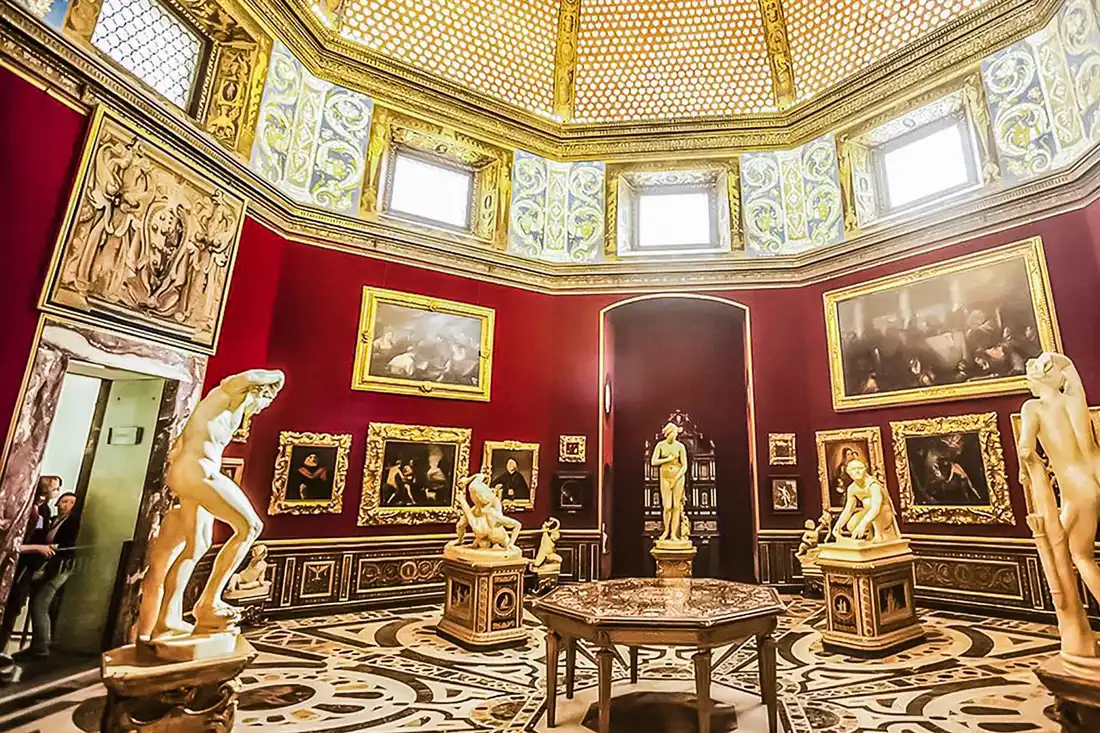
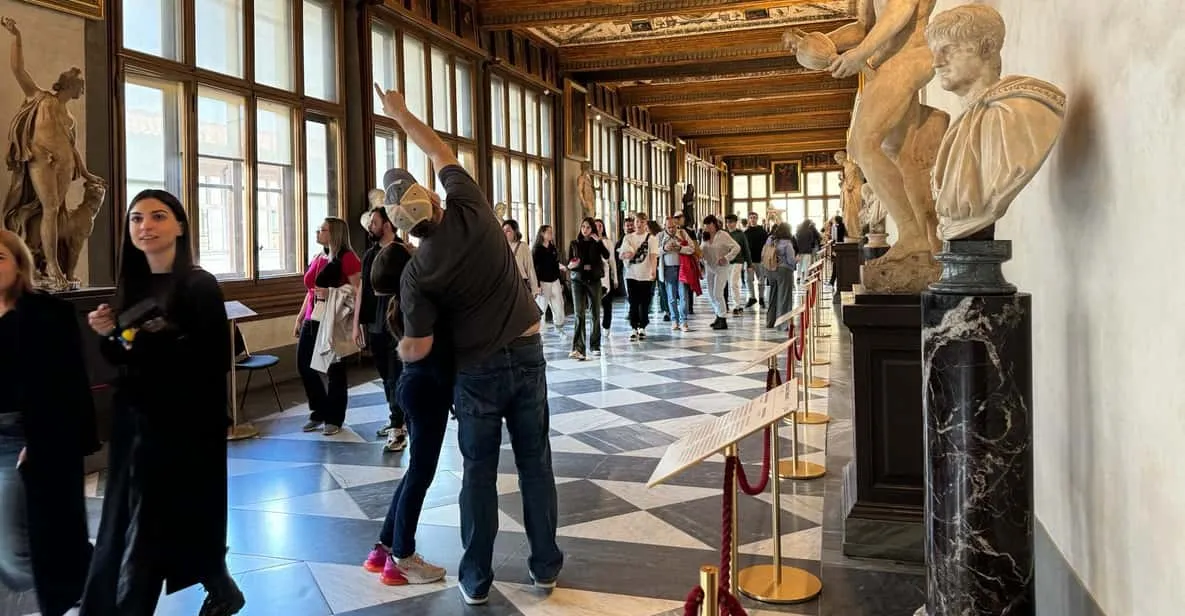
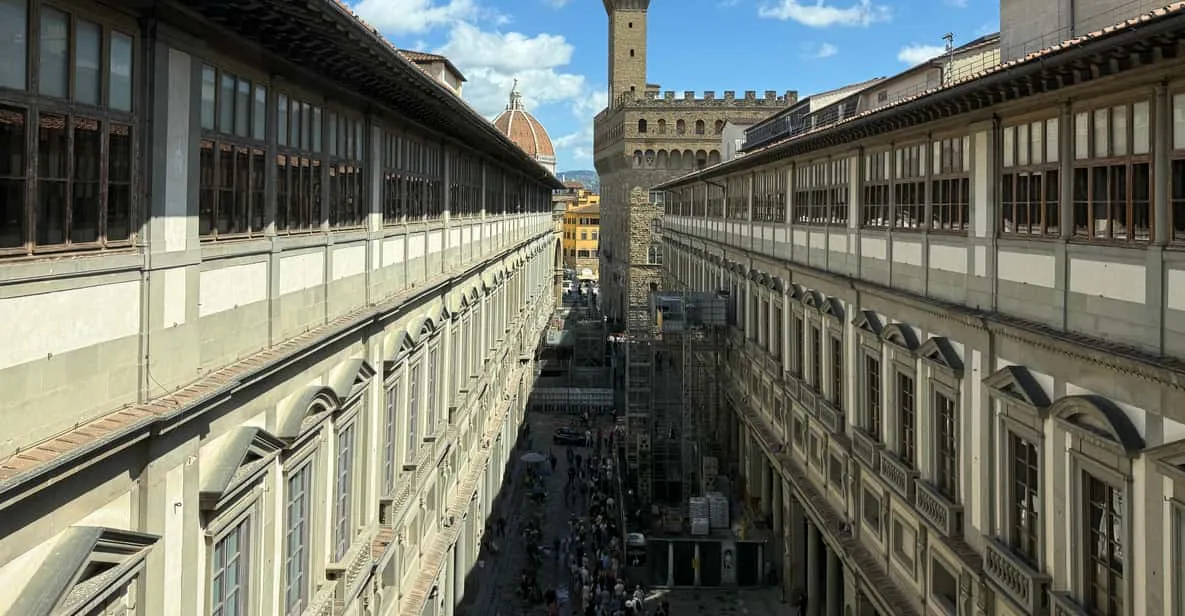
Vasari built the Uffizi in 1560 as offices for the Medici bureaucracy — uffizi simply means offices — and within a generation the family had begun hanging the top floor with the art they could not fit anywhere else. That is how the world's first purpose-built gallery came to exist, and why walking its long corridors is a chronological education: Giotto's gold-ground panels at the start, Botticelli's Birth of Venus and Primavera in the middle, Leonardo, Michelangelo's Doni Tondo and Raphael after them, then Titian's Venus of Urbino and Caravaggio's Medusa near the end.
It is also the most prominent art museum in Florence, Italy by any measure, and the one that punishes bad planning hardest. The Uffizi takes three hours honestly done, closes on Mondays, and its timed slots sell out days ahead from April onwards. Everything else in Florence can be improvised; this cannot.
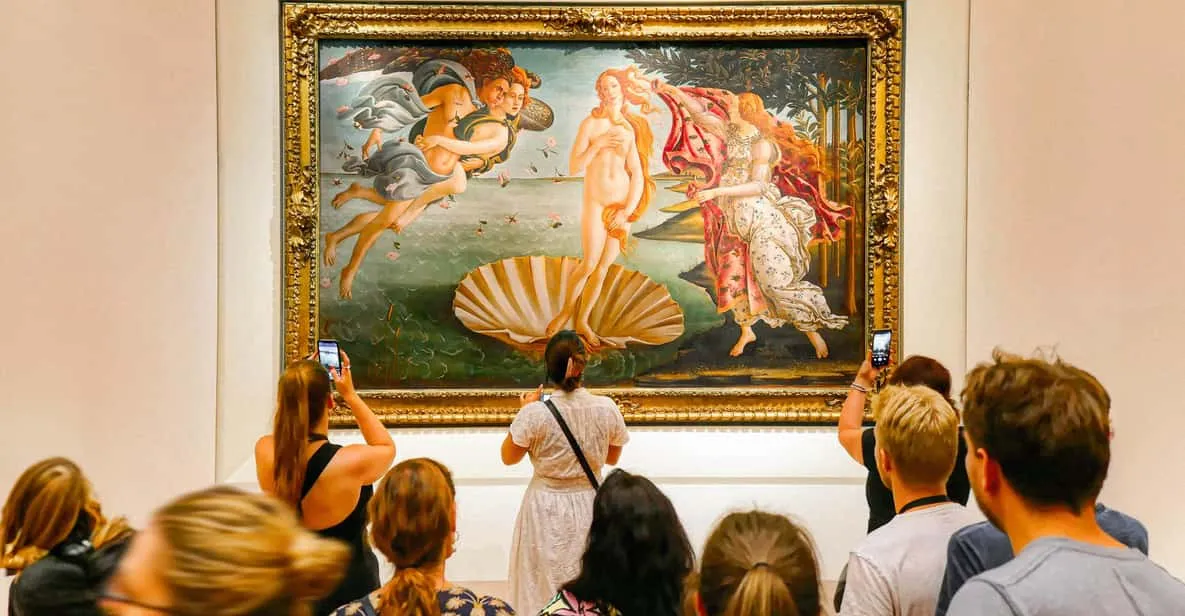
Room 10–14 holds both the Venus and the Primavera on facing walls. Get here first, before the room fills, or last, after the groups leave.
Painted when he was barely twenty, alongside the unfinished Adoration of the Magi that shows how he actually worked.
The only finished panel painting by Michelangelo anywhere, in its original carved frame, and unmistakably the work of a sculptor.
The painting Mark Twain called the foulest in the world, which tells you more about Twain than about Titian.
Painted on a ceremonial shield, the severed head caught mid-scream. The Bacchus and the Sacrifice of Isaac hang nearby.
The Medici's private kilometre-long passage over the Ponte Vecchio, reopened in 2024 and ticketed separately from the gallery.
Timed slots sell out days ahead from April to October. The 8:15 entry is the only genuinely calm hour of the day.
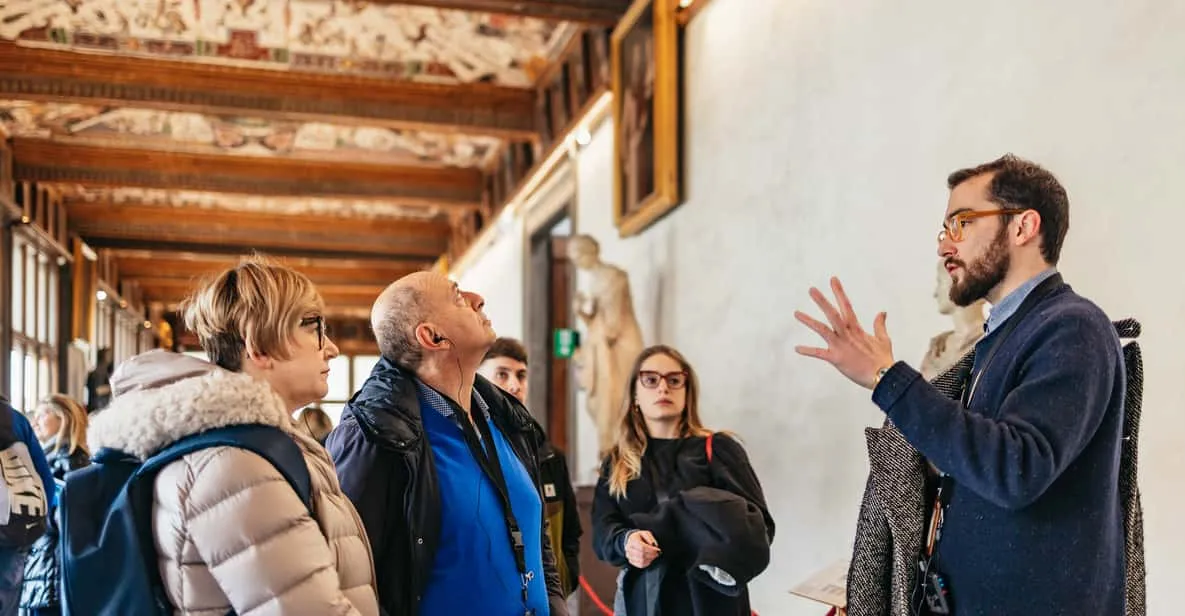
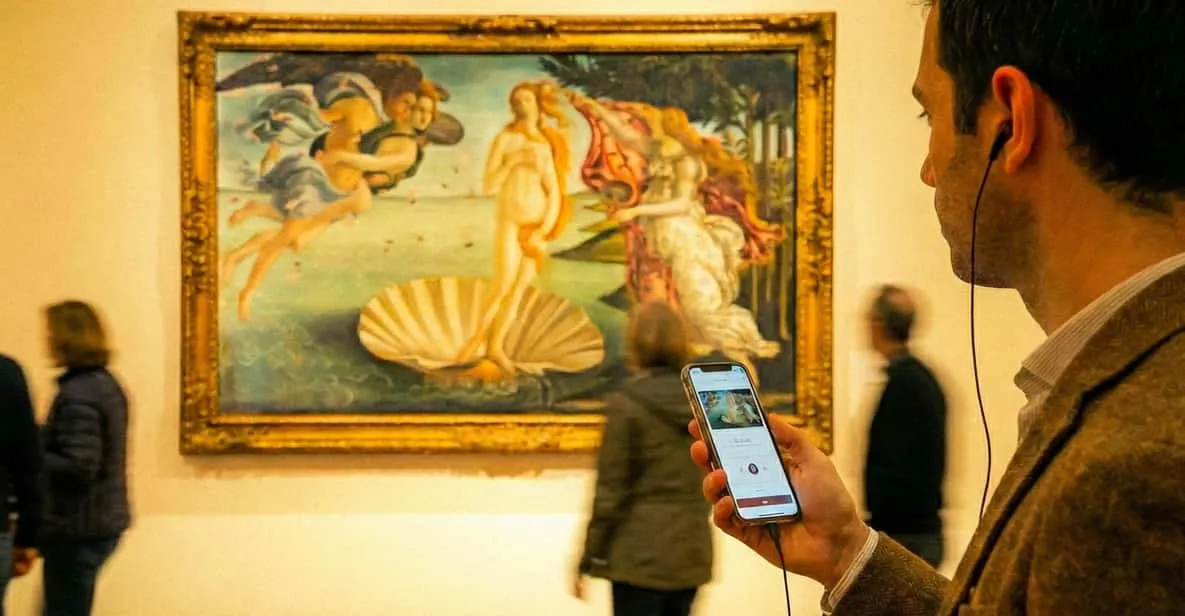
The choice here is really guide or no guide. The collection is hung chronologically and labelled well, so a good audio app is enough for most people and costs a third of a live tour. Pay for a guide if you want the Medici politics behind the pictures, or if three hours of Renaissance painting sounds like work rather than pleasure — that is exactly what a guide fixes.
Booked the 8:15 slot and had the Botticelli room almost to ourselves for ten minutes. By the time we left at eleven it was shoulder to shoulder. The early ticket is the whole trick.
Enormous. We did three hours and still walked past rooms. Do not try to see everything, pick a floor and do it properly. The audio guide on your own phone works well.
The guided tour was worth double the price. Standing in front of the Venus while someone explains what the Medici were paying for and why is a different experience entirely.
Timed tickets, skip-the-line entry, small-group and private guided tours for the Uffizi Gallery, plus the combined ticket that bundles it with the Accademia and David.
from $31
from $86
from $29
from $30
from $64
from $39
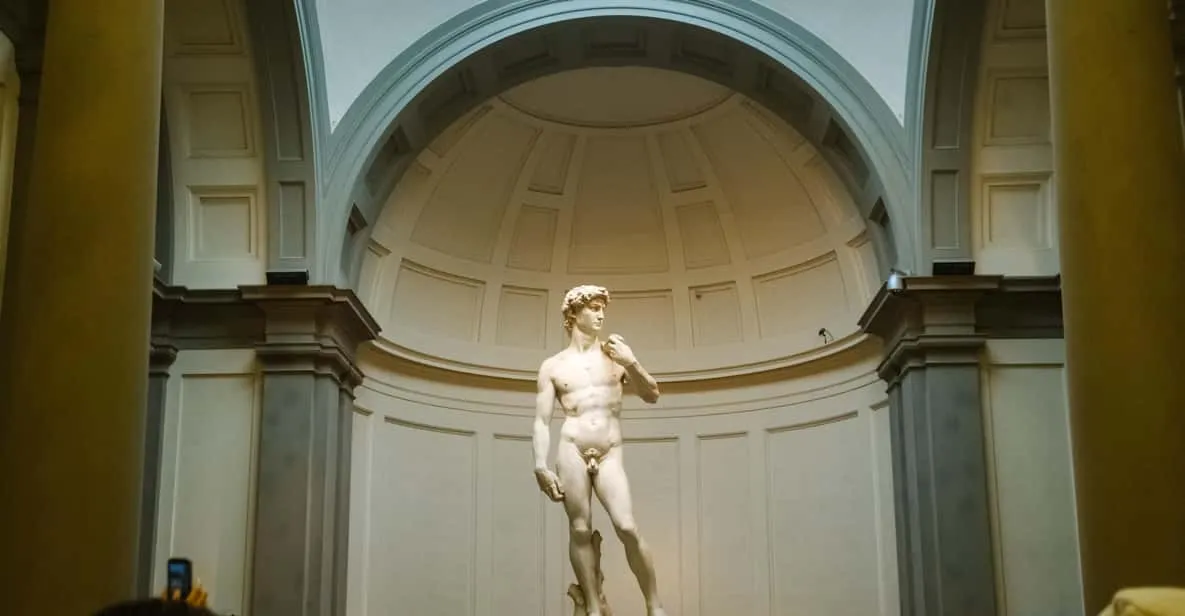
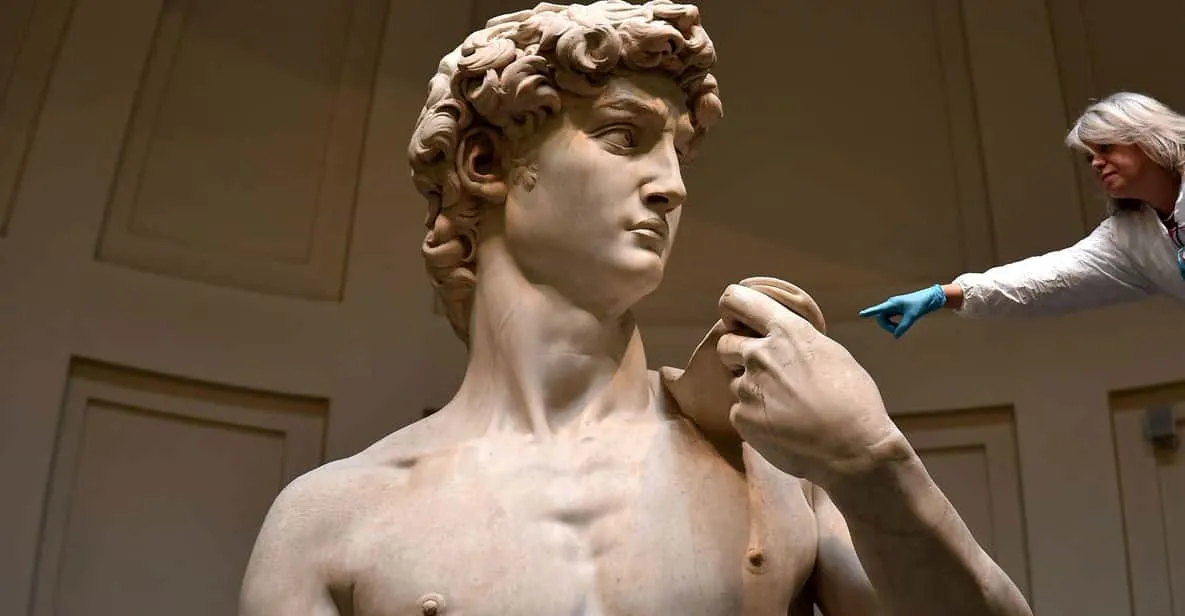
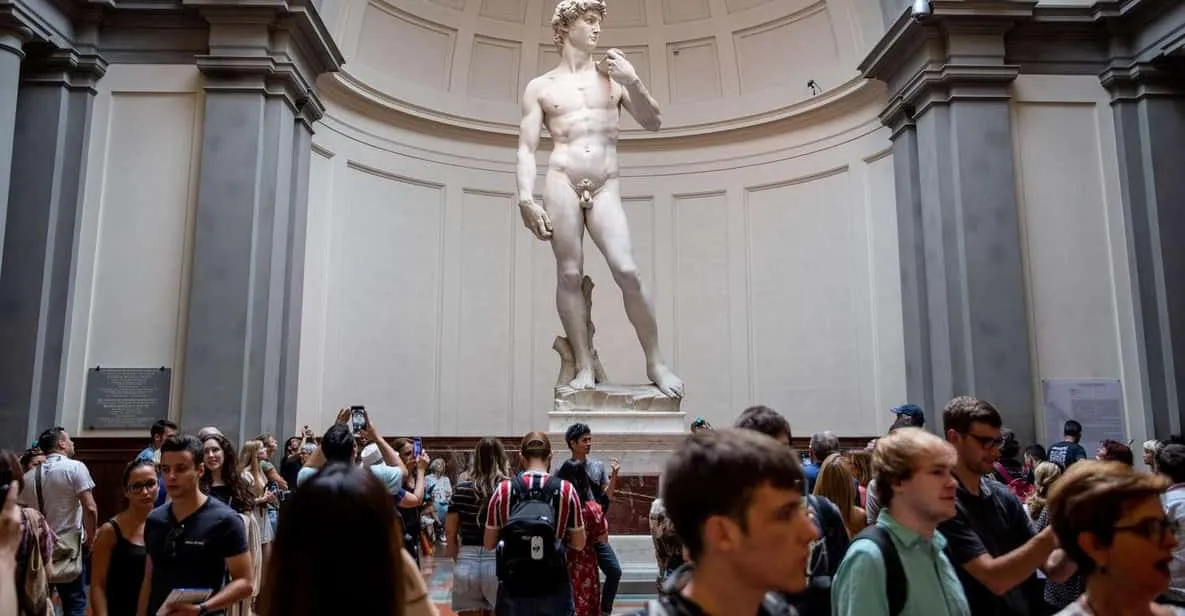
from $289 Michelangelo was twenty-six when he was handed a block of Carrara marble that two sculptors had already given up on, botched and abandoned in a cathedral yard for forty years. He worked it for three years and produced David. The statue stood outside Palazzo Vecchio from 1504 until 1873, taking the weather and, once, a bench thrown out of a window during a riot, before the city finally moved it indoors to the Accademia, where it stands under a purpose-built dome at the end of a corridor.
That corridor is the part people forget. Michelangelo's four Prisoners line it, unfinished, figures half-emerged from raw stone, chisel marks still on them — and seeing them first is what makes David land. The Accademia is a small museum; the michelangelo museum in Florence, Italy that everyone means is really one hall. Ninety minutes covers it, and the queue outside without a ticket routinely runs an hour.
Five metres of Carrara marble under a skylit dome, carved between 1501 and 1504 and moved here in 1873 to save it from the weather.
Four unfinished figures for the tomb of Pope Julius II, wrenching themselves out of the stone. Many visitors find them more moving than David.
The only one of twelve apostles Michelangelo ever started for the Duomo, left roughed out and abandoned. A lesson in how he worked.
Gold-ground panels and altarpieces from before the Renaissance broke, useful context that almost everyone marches straight past.
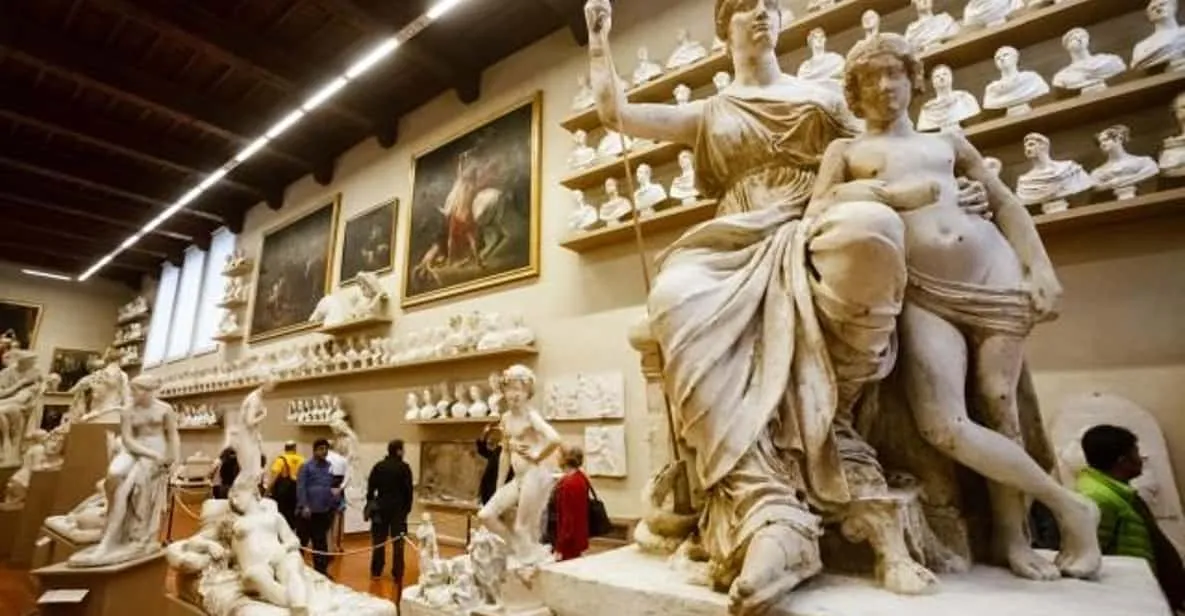
A hall of plaster models bristling with the metal pins sculptors used to copy them into marble. Strange and rarely busy.
The Medici collection, including a Stradivari violin and cello — the last thing you expect to find behind David.
The walk-up queue on Via Ricasoli regularly runs an hour in summer. This is the ticket to book before you fly.
Every option here gets you to the same statue, so the decision is only about price and whether you want someone talking. The cheapest timed ticket is the most-booked item on this entire site for good reason. A guide earns their fee in the Prisoners corridor, where the wall labels tell you almost nothing about what you are looking at.
You think you know what David looks like from photographs and then you walk down that corridor and it is simply not the same object. Fifteen minutes just standing there. Book ahead, the line outside was around the block.
The unfinished Prisoners on the way in were the surprise of our whole trip. Half-carved people fighting their way out of the rock. Our guide explained he left them deliberately and it changed how we saw everything after.
It is a small museum and David is genuinely the reason to go, so an hour is plenty. Do not skip the musical instruments room at the back though, there is a Stradivari in there.
Timed entry, skip-the-line tickets and guided tours for Michelangelo's David at the Accademia Gallery, plus the combined ticket with the Uffizi.
from $33
from $48
from $45
from $49
from $40
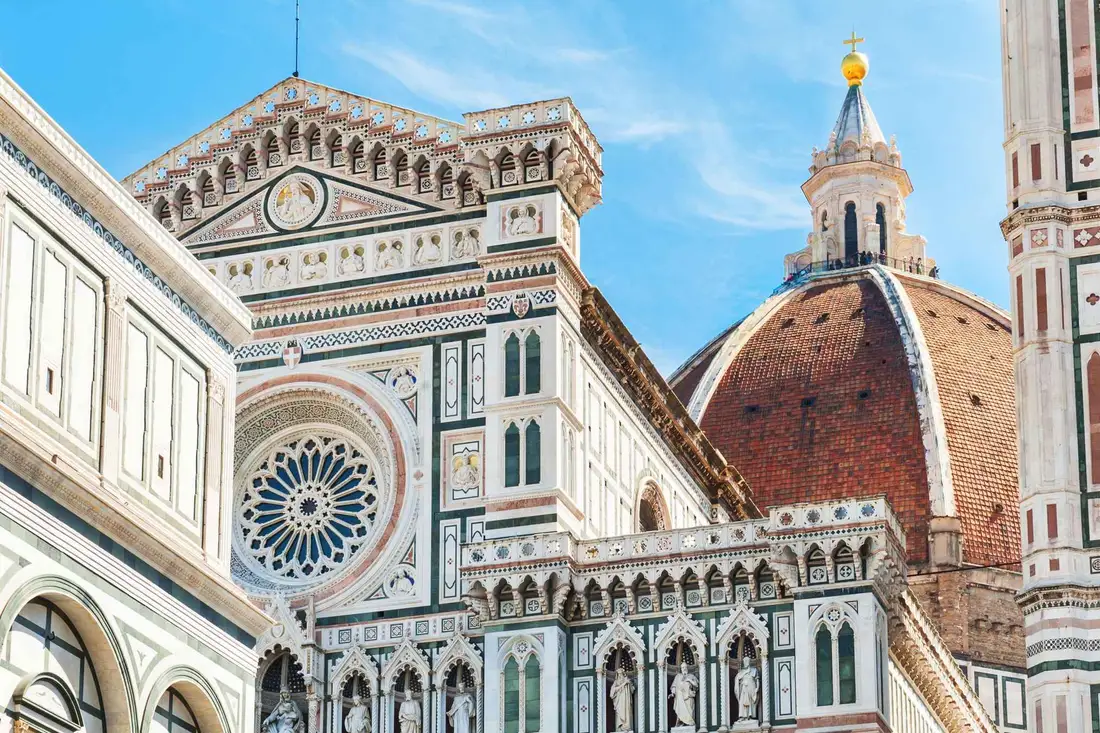
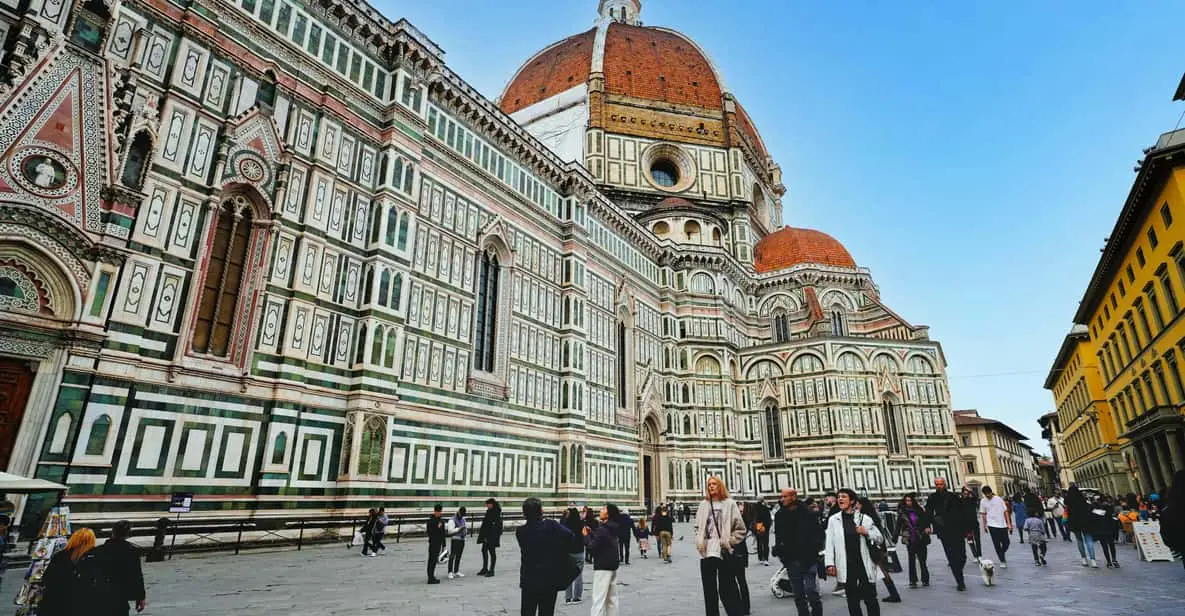
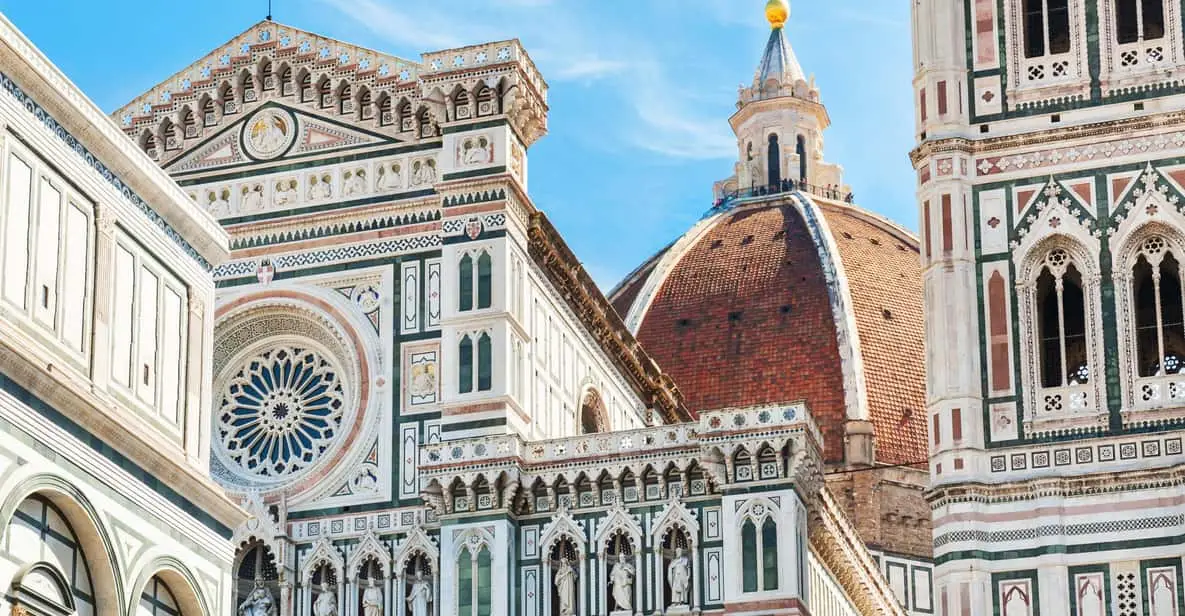
from $35 Florence began its cathedral in 1296 with a hole where the dome should go and no idea how to close it, a gap it left open for over a century. Brunelleschi won the commission in 1418 with a proposal he refused to fully explain, then built it: four million bricks in a herringbone pattern, two shells with a staircase between them, and no supporting scaffolding underneath. It is still the largest masonry dome ever raised.
The complex is five separate things — cathedral, dome, Baptistery, campanile, and the Opera del Duomo museum — and only the cathedral floor is free. The dome climb runs to 463 steps, has no lift, and its slots go weeks in advance. The museum, meanwhile, is the one almost nobody books and arguably the best of the five: Ghiberti's original Gates of Paradise are inside, along with Michelangelo's Bandini Pietà and Donatello's gaunt wooden Magdalene.
463 steps rising between the inner and outer shells, past Vasari's Last Judgment at arm's length, onto the terrace at the top. Timed, and never on Sundays.
Older than the cathedral, its ceiling a Byzantine mosaic of gold with a Last Judgment where the devil eats the damned whole.
Ghiberti spent 27 years on these bronze doors. The panels on the Baptistery are copies; the originals are in the museum, restored and behind glass.
Carved in his seventies for his own tomb, then attacked with a hammer by the artist himself. The hooded figure of Nicodemus is his self-portrait.
414 steps and no dome above your head, which makes it the better climb if you want the dome itself in your photograph.
The crypt beneath the nave holds the older church the Duomo was built over, and Brunelleschi's own grave.
The dome is the one ticket in Florence that sells out weeks rather than days ahead. No state pass covers it.
Decide the climb first, because everything else in the complex is flexible and the dome is not. If 463 steps in a narrow curving passage is not for you, the campanile is shorter, and honestly gives the better view since it looks at the dome rather than from it. The museum needs no advance booking and is the perfect hour when the heat outside becomes unreasonable.
The climb is not for the claustrophobic, it gets narrow and steep near the top and there is nowhere to turn back. But coming out onto that terrace over the whole of Florence is something I will remember for good.
Walking past Vasari's Last Judgment frescoes from about a metre away, on the internal walkway, is worth the ticket by itself. You see brushwork nobody was ever meant to see.
Book the dome weeks out, not days. We nearly missed it. The Opera museum next door was the surprise, almost empty and the real Ghiberti doors are stunning.
Timed tickets for Brunelleschi's dome climb, guided tours of the cathedral, and entry to the Baptistery, crypt and the Opera del Duomo museum.
from $53
from $22
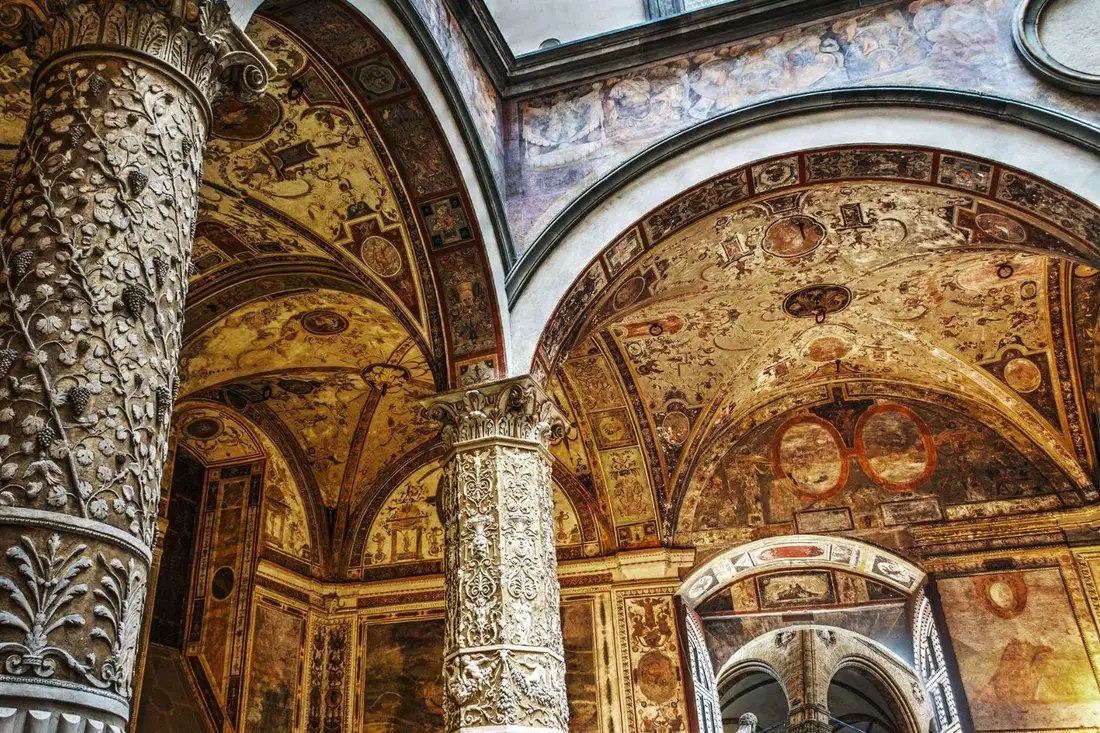
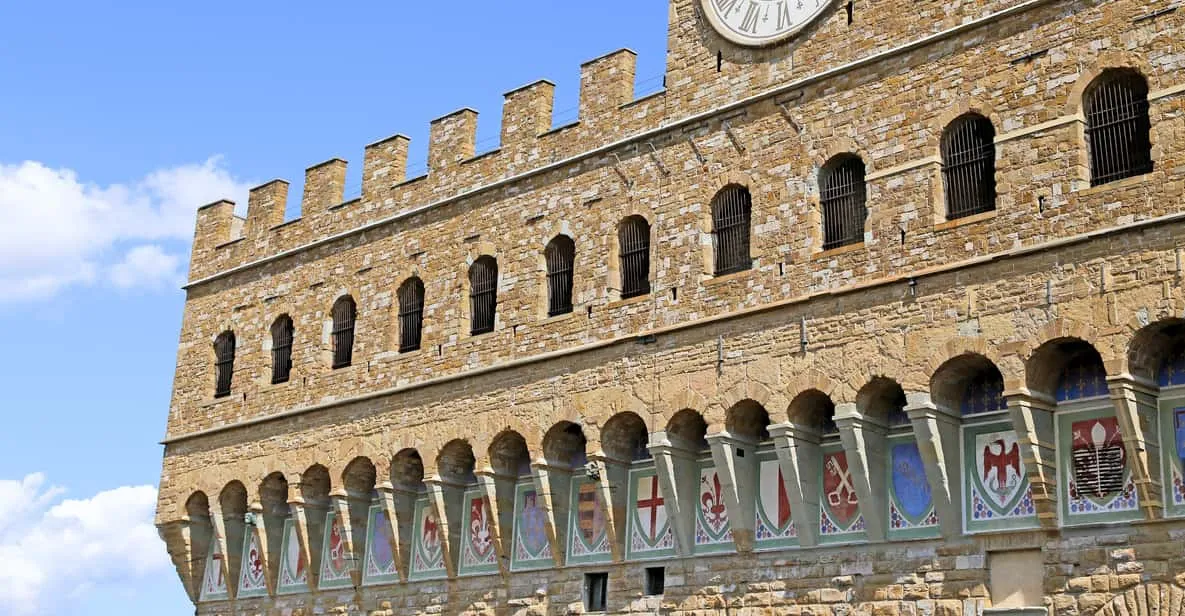
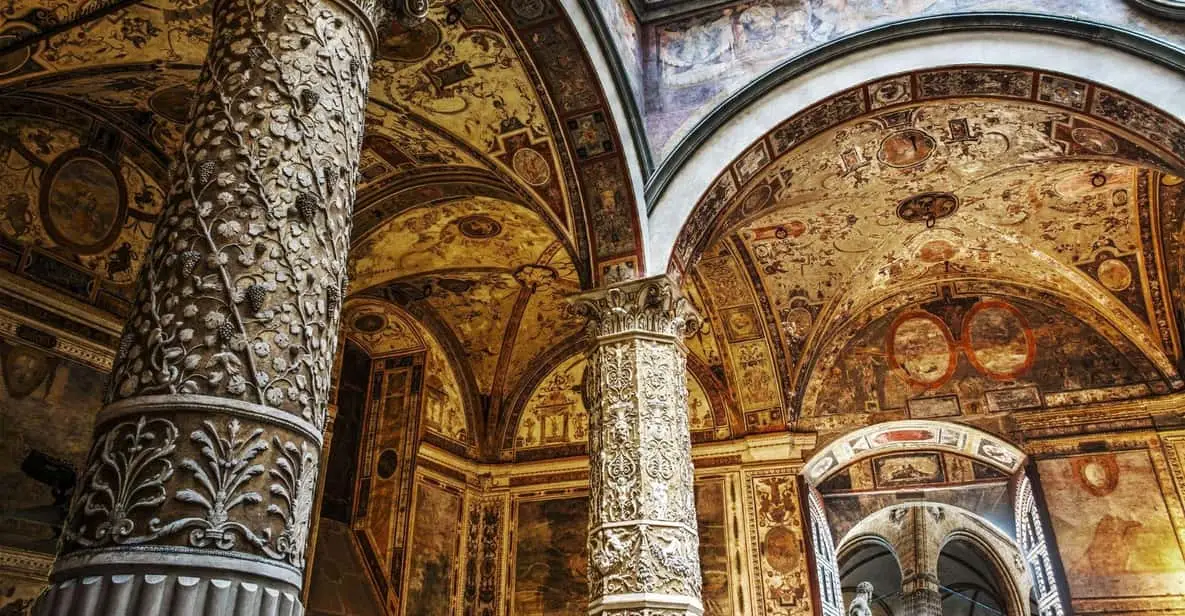
from $39 The Medici ran Florence for three centuries from two buildings, and both are museums now. Palazzo Vecchio was the public face: a fortress town hall on Piazza della Signoria whose Salone dei Cinquecento is the largest room of its kind in Italy, walls swallowed floor to ceiling by Vasari's battle frescoes, with Michelangelo's Genius of Victory standing in the middle of it. Behind a hidden door off that hall is the Studiolo of Francesco I, a windowless jewel-box study where a grand duke kept his obsessions.
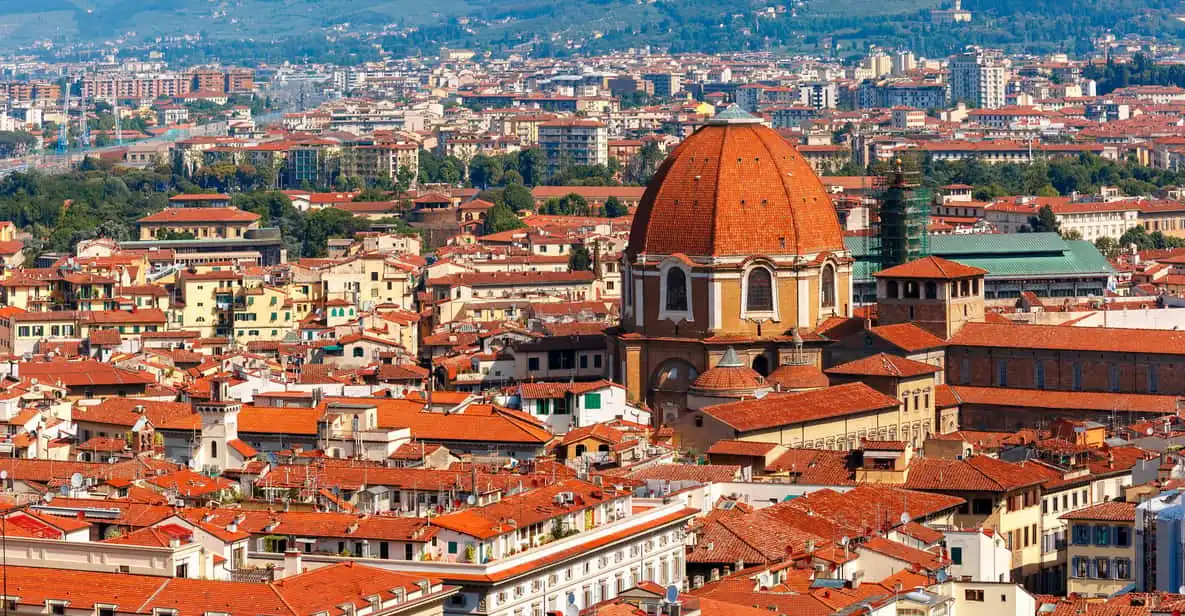
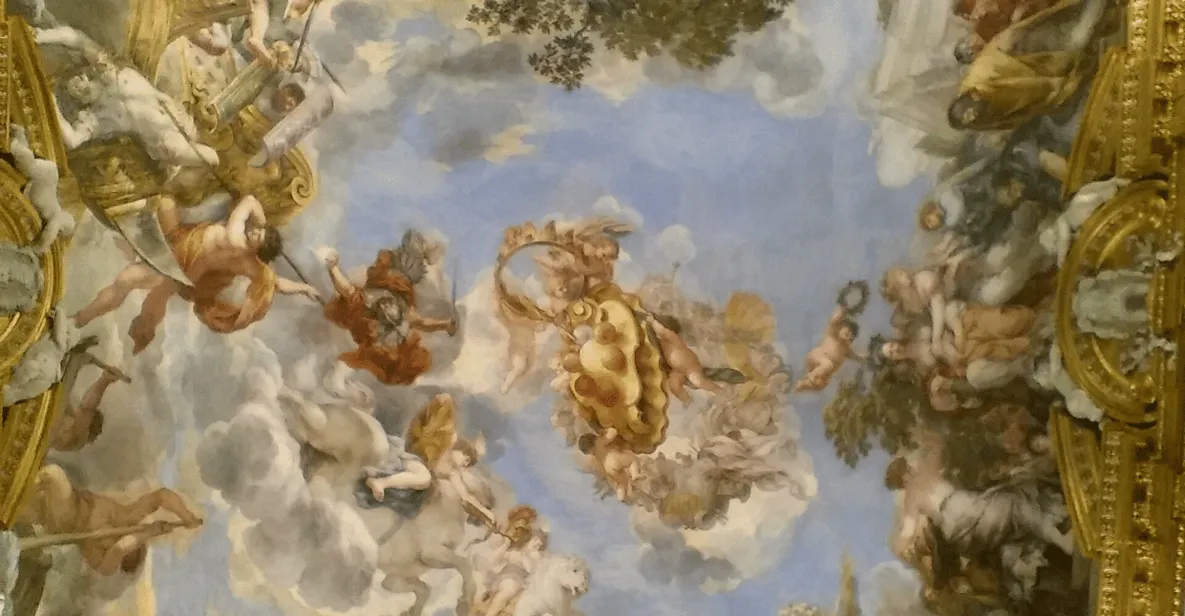
Across the Arno, the Pitti was the private one. The Medici bought it, doubled its size and filled the Palatine Gallery with Raphaels and Titians hung the old way — frames stacked three deep on silk, no labels, sorted by how they looked together rather than who painted them. Behind it they landscaped the Boboli hillside into the template every formal Italian garden has copied since. And at San Lorenzo, the Medici Chapels hold the New Sacristy, where Michelangelo designed the room and carved the tombs inside it, Night and Day and Dawn and Dusk sprawling over two of the least important Medici who ever lived.
Fifty-four metres long, frescoed by Vasari with Florentine victories, with Michelangelo's Genius of Victory in the middle. Leonardo's lost Battle of Anghiari may still be under the plaster.
A secret windowless study behind a concealed door, lined with paintings and cupboards where the grand duke kept his alchemy and his curiosities.
Eleven Raphaels, including the Madonna della Seggiola and La Velata, hung the original Medici way: stacked three deep on silk walls.
He designed the architecture and carved the sculpture, so the room and its tombs are a single work. Night, Day, Dawn and Dusk lie on the sarcophagi.
An entire octagonal room faced in inlaid coloured stone, worked on for three hundred years and still not finished. Absurd and unforgettable.
The Buontalenti Grotto, the amphitheatre and an Egyptian obelisk on a hillside that invented the Italian garden. Bring water; there is little shade.
One of the few major museums open on Mondays, which makes it the obvious plan when the Uffizi and Accademia shut.
These do not group neatly, so treat them as three separate visits. Palazzo Vecchio and the Medici Chapels are both central and take about an hour each. The Pitti is across the river and is a genuine half-day — do the Palatina and Boboli, and ignore the four other museums inside it unless you have days to spare.
The Salone dei Cinquecento genuinely stopped us in the doorway. Photographs cannot convey the scale. And then you find the tiny secret study behind a hidden door and it is the opposite extreme.
Pitti is enormous, do not attempt all of it. We did the Palatine Gallery and Boboli and that was a full afternoon. Paintings stacked to the ceiling with no labels, exactly as the Medici had them.
The Medici Chapels took an hour and cost almost nothing and I think about that New Sacristy more than anything else we saw. Michelangelo built the room and the sculpture together.
Tickets for Palazzo Vecchio, the Medici Chapels, Pitti Palace and the Boboli Gardens, plus guided visits to the Palatina Gallery and the Medici Dynasty museum.
from $37
from $20
from $40
from $34
from $68
from $14 The famous art museums in Florence, Italy are, almost without exception, painting museums — and that is the great imbalance of the city, because everyone queues for the paintings and almost nobody queues for the sculpture. The Bargello is where the Renaissance actually starts: Ghiberti and Brunelleschi's rival panels from the 1401 competition for the Baptistery doors hang side by side there, the two objects that arguably began the whole thing. Donatello's bronze David is upstairs — the first free-standing nude cast since antiquity, and a strange, smirking, unsettling thing next to Michelangelo's. Michelangelo's own Bacchus and Brutus are in the same building. It is a former prison and execution yard, and you can often have a room to yourself.
Santa Maria Novella, the church by the station that everyone walks past dragging a suitcase, holds Masaccio's Trinity — the first painting in Western art to use true linear perspective, a wall that appears to open into a chapel that is not there. And the Archaeological Museum keeps what the Medici collected before the Renaissance interested them: the Chimera of Arezzo, an Etruscan bronze from around 400 BC, and the second-largest Egyptian collection in Italy.
Cast around 1440, the first free-standing nude since the Romans, and nothing like Michelangelo's — young, smirking, wearing a hat and boots and little else.
Ghiberti's and Brunelleschi's entries for the Baptistery doors, mounted side by side in the Bargello. The Renaissance's starting gun, on one wall.
Carved at twenty-two, a drunk god visibly losing his footing. His Brutus and the Pitti Tondo are in the same room.
In Santa Maria Novella. The first true linear perspective in Western painting, opening a chapel into a flat wall. Painted around 1427.
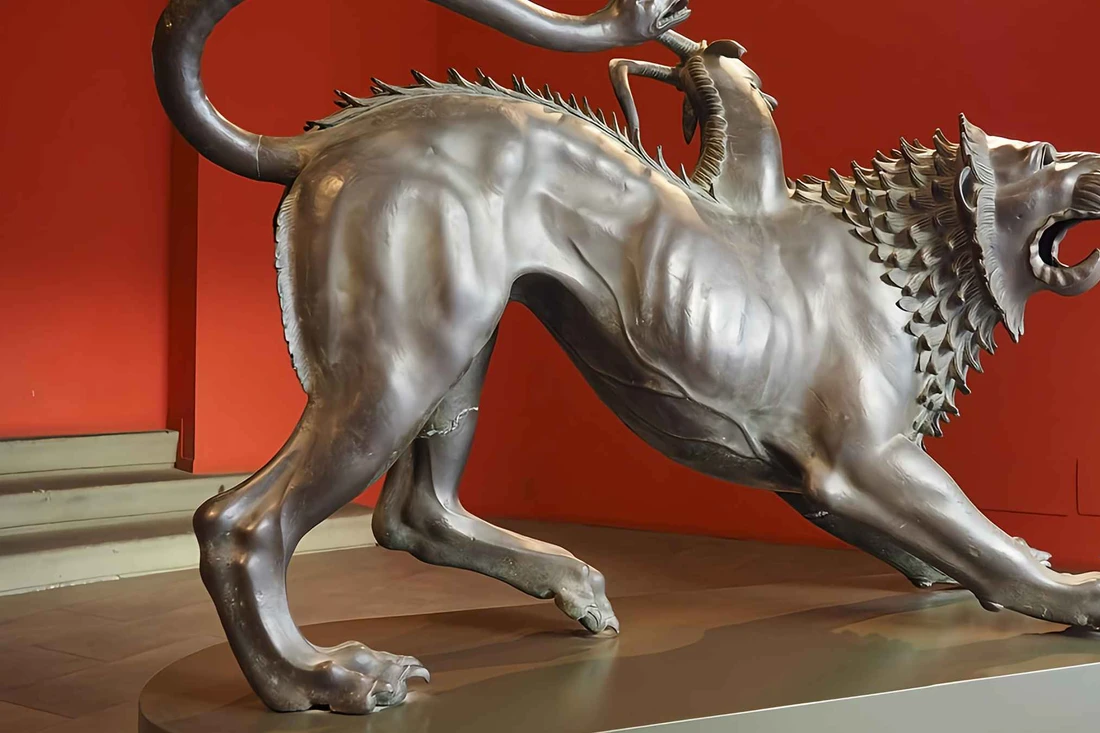
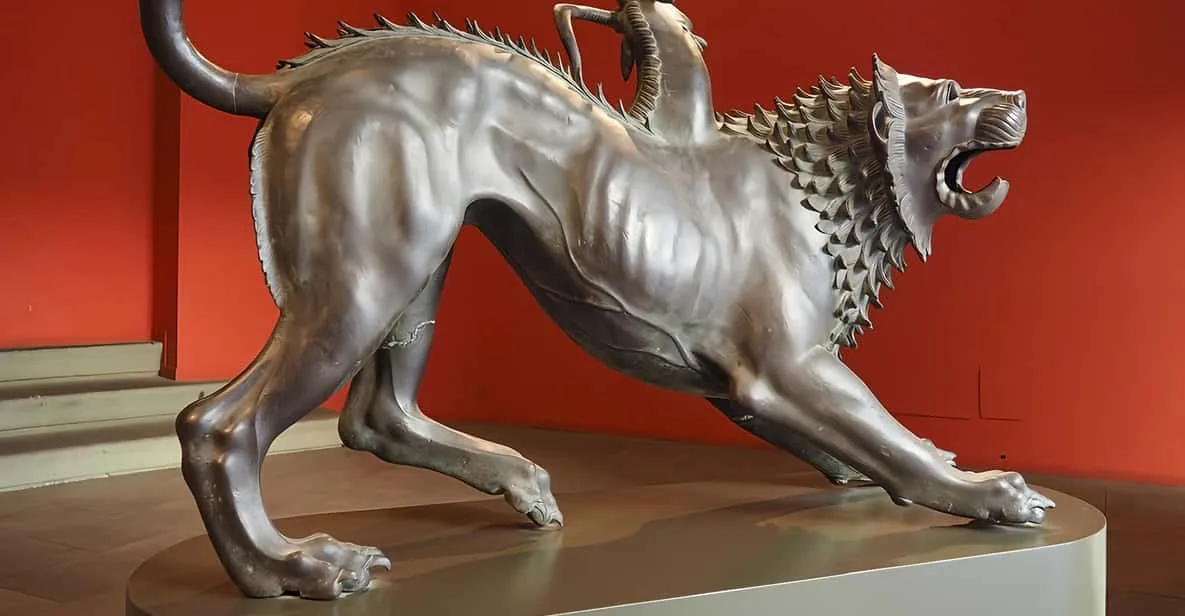
An Etruscan bronze lion-goat-serpent from about 400 BC, dug up in 1553 and restored by Cellini. One of the finest bronzes to survive antiquity.
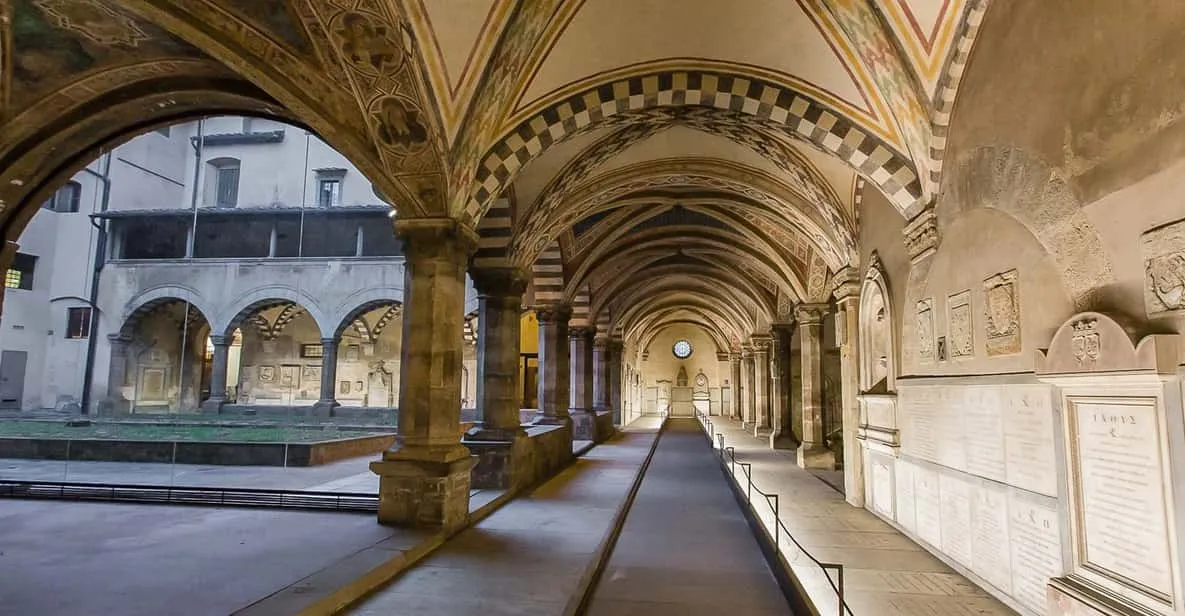
Uccello's frescoes, painted in a green earth pigment that gives the cloister its name, plus the Spanish Chapel next door.
Closures rotate through the month rather than falling on a fixed day — check the date, not the weekday.
None of these three needs booking days ahead, which is precisely the point of them. Use them as the recovery hours between the big galleries. The Bargello is three minutes from Palazzo Vecchio, so pair those two.
The Archaeological Museum is beside the Accademia, which makes it the obvious follow-on after David.
The Bargello was the best hour of our week and we nearly skipped it. Donatello's David, Michelangelo's Bacchus, and about nine other people in the entire building. Go.
Santa Monaca aside, Santa Maria Novella was our unexpected favourite. The Masaccio Trinity is right there on the left wall and the whole crowd walks past it to photograph the facade.
The Archaeological Museum is dusty and old-fashioned in the best way. The Chimera is extraordinary and there was nobody else in the room. Good escape from the Duomo crowds.
Reserved entry to the Bargello sculpture collection, Santa Maria Novella and its frescoed cloisters, and a guided visit to the National Archaeological Museum.
from $21
from $18
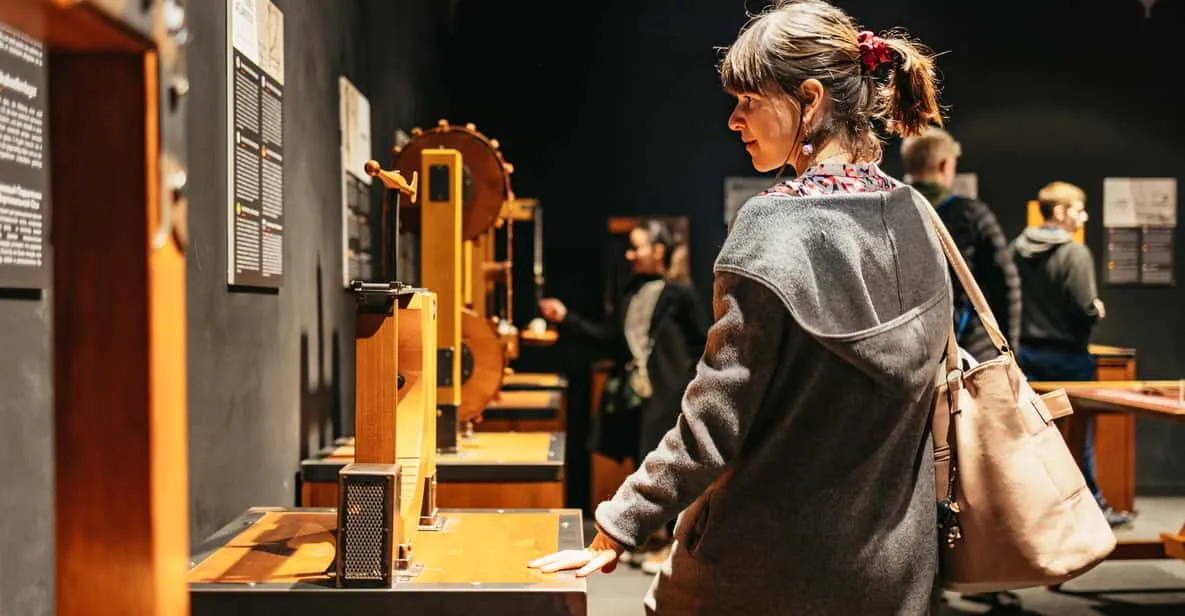
from $186 The Renaissance was not only painting, and the science museum in Florence, Italy that proves it sits directly behind the Uffizi, almost always empty. Museo Galileo holds the Medici and Lorraine instrument collection: armillary spheres, astrolabes, the only two telescopes Galileo made that survive, the objective lens through which he found Jupiter's moons — and, in a glass egg on a plinth, his middle finger, removed from his corpse by an admirer in 1737. It is a genuinely strange and wonderful hour, and the perfect antidote after three hours of Madonnas.
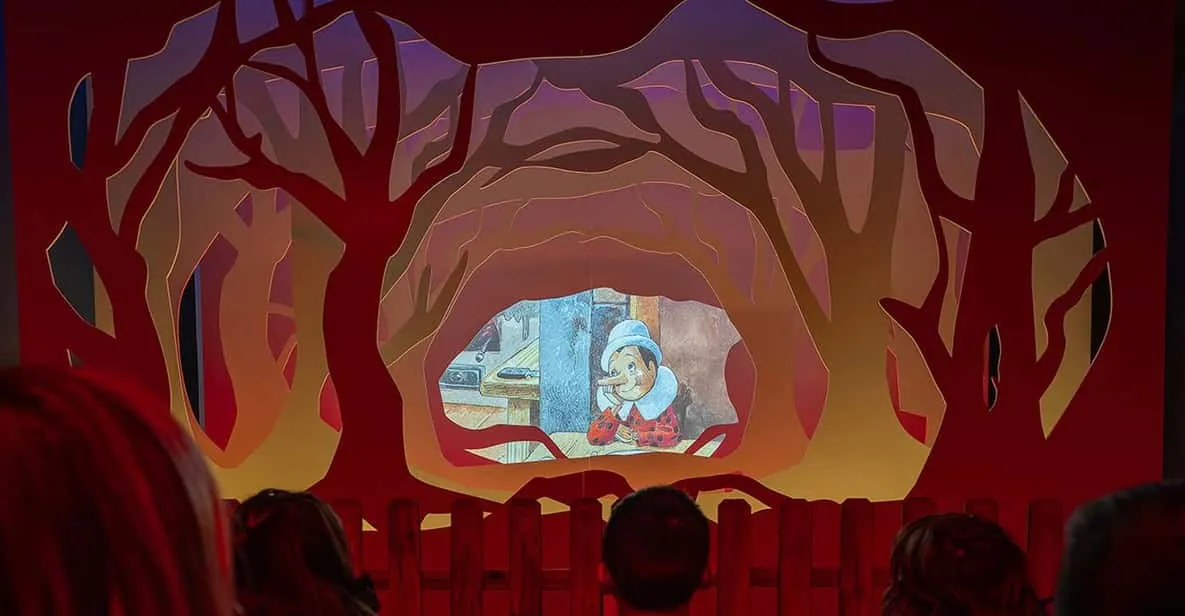
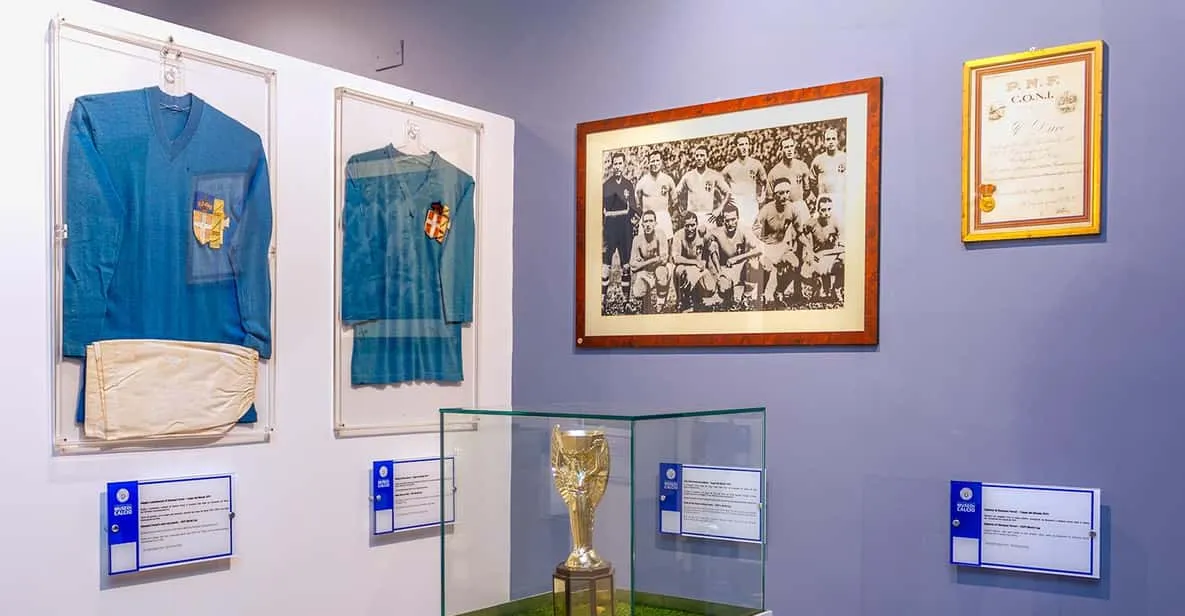
The Leonardo da Vinci museum in Florence, Italy comes in two versions and both are aimed at families rather than scholars: full-size machines built from his notebooks — the flying screw, the tank, the bearing systems — that you are meant to crank and touch and set moving. At around ten dollars the interactive one is the best-value hour in the city with children. Add the Pinocchio museum for younger kids, since Carlo Collodi was Florentine and wrote the book here, and the Italian Football Museum out at Coverciano for anyone who would rather look at the Azzurri than another altarpiece.
The only two he built that survive, plus the broken objective lens he used to find Jupiter's moons in 1610, mounted in an ivory frame.
Removed from his body in 1737 when it was reburied in Santa Croce, and displayed in a glass egg. Pointing upward, which was rather the argument.
Room-sized brass models of a universe that turned out to be wrong, built at enormous expense and beautiful regardless.
Full-size working reconstructions from his notebooks — the aerial screw, the tank, the self-propelled cart — and you are meant to touch them.
Collodi was a Florentine and wrote the book here. Walk-through sets rather than glass cases, aimed squarely at younger children.
The Italian national team's training ground and museum, with the shirts, boots and memorabilia from Italy's four World Cup wins.
No advance booking needed and open on Mondays — the ideal filler when the state museums are shut.
None of these need booking ahead, and all of them stay open on Mondays, which makes this the category that rescues an awkward day. With children, the honest advice is one big gallery per day maximum, and one of these as the reward afterwards.
Museo Galileo is the best museum in Florence that nobody talks about. Right behind the Uffizi, air conditioned, nearly empty, and his actual telescopes are in there. Also his finger, which the children found hilarious.
Took the kids to the Leonardo museum after a morning of paintings and it saved the day. They could turn the cranks and work the machines. Eleven euros and worth triple.
Small and a bit rough around the edges but the machine reconstructions are clever and our eight-year-old spent an hour on them. Good rainy-afternoon option in the centre.
Entry tickets for Museo Galileo and its Medici instrument collection, the two Leonardo machine museums, the Pinocchio experience and the Italian Football Museum.
from $20
from $11
from $14
from $16
from $14 Opera was invented in Florence. In the 1590s a circle of Florentine noblemen and musicians called the Camerata decided that Greek drama had been sung rather than spoken, and set about reconstructing it — and the form they accidentally produced became opera. The first one ever written, Jacopo Peri's Dafne, was performed in a palace here in 1598.
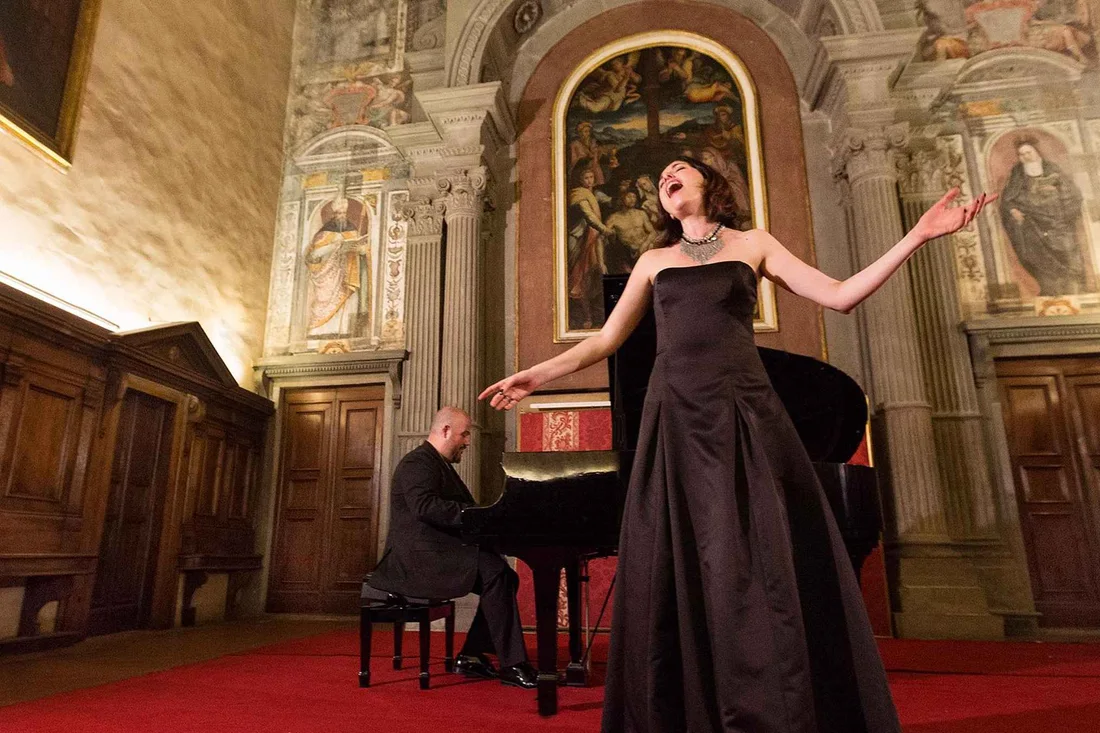
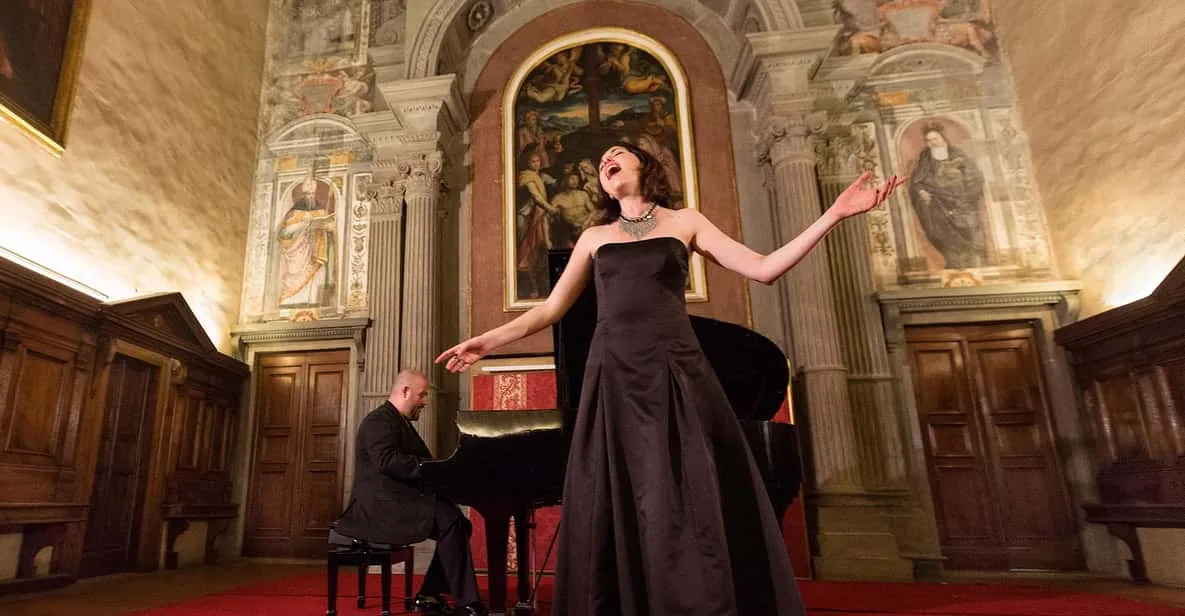
The modern descendant of that is a good deal less scholarly and a lot more enjoyable: an evening of Verdi, Puccini and Rossini sung live in Santa Monaca, a church built in the 1400s in the Oltrarno. There is no sound system, because the stone does that work, and the room seats a few dozen people, which means you are close enough to see the singers breathe. It is one of the most-booked evenings in Florence and it costs less than a museum ticket.
The Florentine Camerata invented the form in the 1590s trying to reconstruct Greek tragedy. Peri's Dafne, the first opera ever, premiered here in 1598.
Santa Monaca was built in the 1400s and the acoustics are the building's, not a speaker's. You hear the voices as they were meant to carry.
The famous arias rather than a full staged work, which makes it a good first opera if you have never sat through one.
A few dozen seats, no distance, no opera glasses. Nothing like the experience of a large house.
Around $34 for an evening, less than most of the gallery tickets on this page.
Across the river in the artisan quarter, so pair it with dinner on that side after a Pitti afternoon.
Seating is not assigned and the room is small, so arriving twenty minutes early genuinely changes your evening.
This is an evening event, so it slots in after a museum day rather than competing with one. The Oltrarno location pairs naturally with the Pitti Palace and Boboli Gardens across the river, and Santo Spirito's restaurants are a few minutes' walk away for dinner afterwards.
We were three metres from the soprano in a church from the 1400s with no microphones. Genuinely moving in a way a big opera house has never been for me. And cheaper than the Uffizi.
Not a full opera, it is the greatest hits, which for us was perfect as a first taste. The acoustics in that little church are unreal. Go twenty minutes early for a good seat.
Lovely evening. The church is small and the seats are hard wooden pews, so be warned. But the singing was superb and it was the best thirty euros we spent in Florence.
Live Italian opera by Verdi, Puccini and Rossini, performed in the 15th-century acoustics of Santa Monaca church in the Oltrarno.
from $34 Florence sits at the centre of Tuscany, which means the day-trip options are almost unfair. Two here are worth building a day around, and they pull in opposite directions. South is the classic: Monteriggioni, a walled hilltop village with fourteen towers and its own Templar museum, then down through the Val d'Orcia to Montalcino and Pienza — the landscape that appears on every postcard of Tuscany, with an optional Brunello tasting to finish.
North is the outlier. Modena is two hours away and holds the Ferrari Museum, and the private full-day version pairs it with tastings of genuine Parmigiano Reggiano at a working dairy and traditional balsamic aged in wooden casks for twelve years. It is the most expensive booking on this site by a distance, and a full day committed, but it is also the only thing here that has nothing to do with the Renaissance — which after four days of it can be exactly the point.
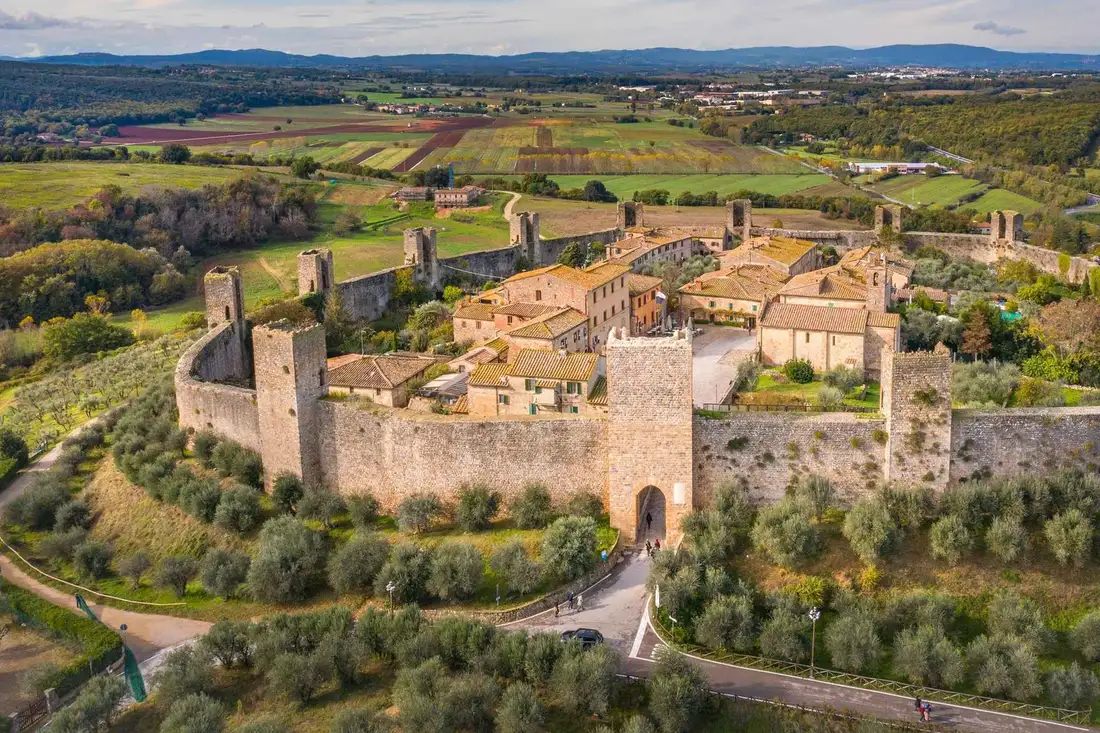
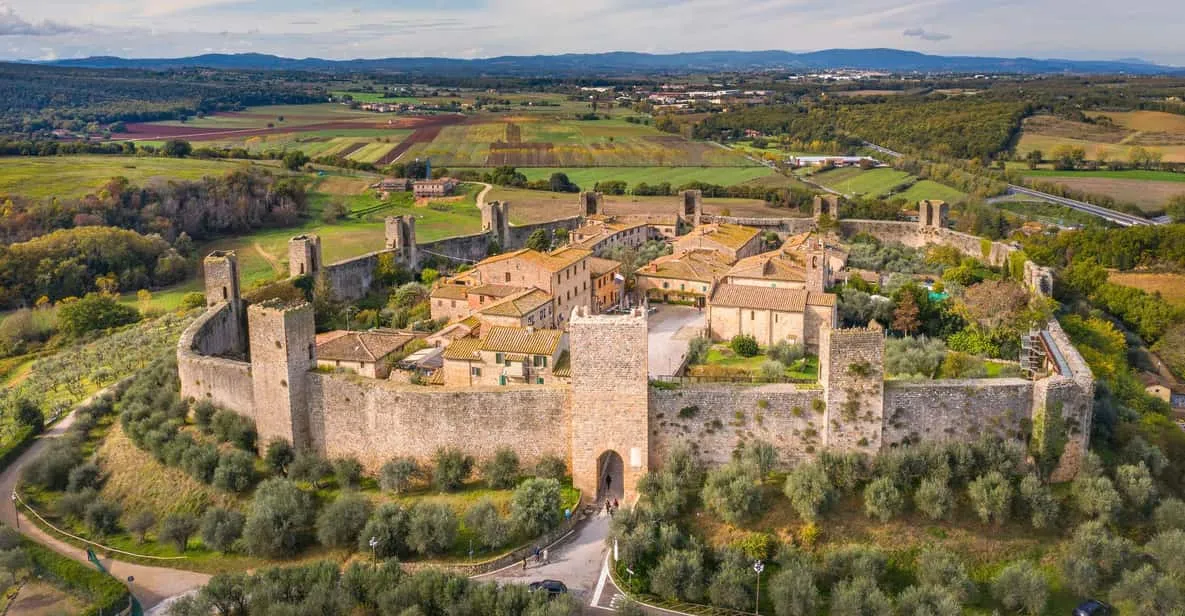
A walled village Dante compared to a ring of giants, with a Templar museum inside, then the Val d'Orcia's cypress-lined hills, Montalcino and Pienza.
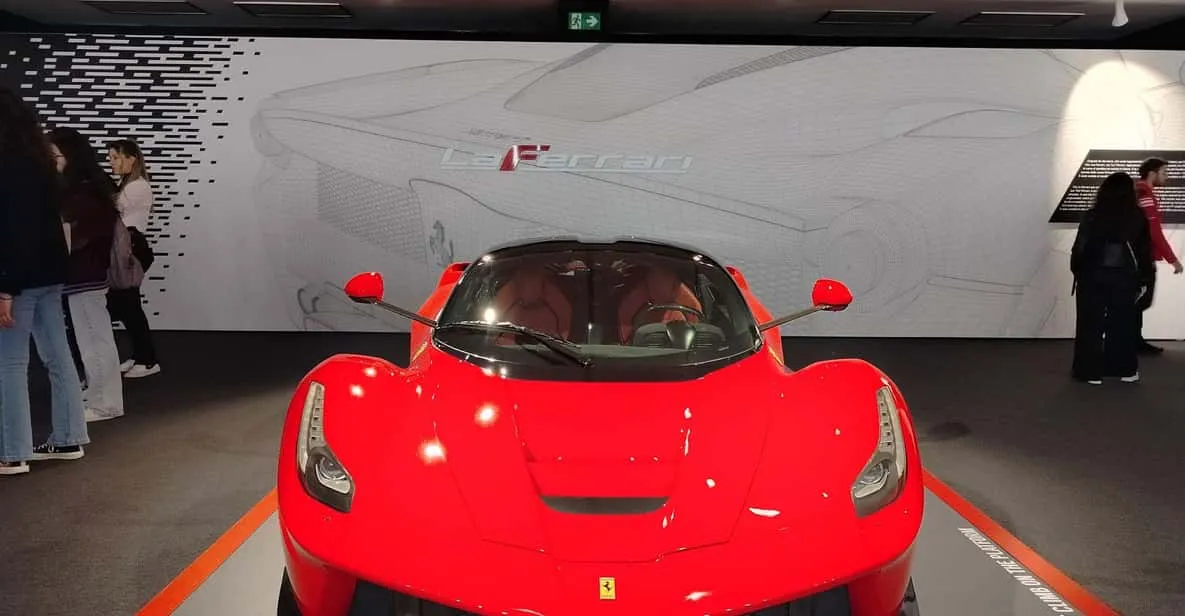
Enzo Ferrari's birthplace and the collection, two hours north, paired on this tour with Parmigiano and traditional balsamic tastings.
Both run with transport included, which is the point — the Val d'Orcia villages and the Modena dairies are painful to reach without a car.
A full day out. Pick this or the Modena trip — they run in opposite directions and cannot be combined.
One day trip per trip is the honest recommendation — Florence's own museums will take everything you give them. If you have a spare day and want Tuscany, go south. If you have a spare day and are tired of Renaissance art, go north to Modena.
Monteriggioni is tiny and completely walled and you can walk the ramparts. Then the Val d'Orcia in the afternoon is exactly the Tuscany you had in your head. The wine tasting at the end was a good call.
Long day but a genuinely great one. Pienza for the pecorino, Montalcino for the Brunello, and the driving between them is half the pleasure. Do not attempt it without a tour unless you rent a car.
The Ferrari day is expensive and completely worth it if you care about cars. The balsamic tasting was the surprise, twelve-year-aged is nothing like what you buy at home.
Guided days out to the walled town of Monteriggioni and the Val d'Orcia, and a private trip north to the Ferrari Museum with Parmigiano and balsamic tastings.
from $49
from $458 Not every museum in Florence sells tickets through a booking platform, and several of the best simply take your money at the door. None of these need reserving, none appear in the comparison table above, and all of them are worth an hour.
Five ways to spend a day among the museums in Florence, Italy without rushing. The historic centre is walkable end to end in twenty-five minutes, so these routes are grouped by what sits near what — and by which day of the week they survive.
| Day plan | The route | Why it works |
|---|---|---|
| The essentials | Accademia at 8:15 → Duomo complex → lunch → Uffizi mid-afternoon | David, the dome and Botticelli in one day. Brutal but it is the day most people actually want |
| The Monday plan | Palazzo Vecchio → Museo Galileo → Duomo museum → Leonardo Interactive | Every state museum is shut on Mondays. These four are not, and they are all central |
| Sculpture day | Bargello at opening → Medici Chapels → Casa Buonarroti → Loggia dei Lanzi, free | The Renaissance told through stone instead of paint, and you will queue for none of it |
| Oltrarno day | Pitti Palace & the Palatina → Boboli Gardens → dinner in Santo Spirito → opera at Santa Monaca | One side of the river, no backtracking, ending with the best-value evening in the city |
| With kids | Leonardo Interactive → Museo Galileo → gelato → Pinocchio Museum or the dome climb | Hands-on, cheap, no gallery fatigue, and nothing that needs booking weeks ahead |
There are fewer free museums in Florence, Italy than in most Italian cities, because so much of the collection is state-run and ticketed. But the one rule worth planning around is a good one: Italy's state museums open free to everyone on the first Sunday of every month, and in Florence that includes the Uffizi, the Accademia, Pitti, Boboli, the Bargello, the Medici Chapels and the Archaeological Museum. The catch is obvious — those are the busiest days of the month, timed reservations are not always available, and you should be in the queue before opening.
If your trip includes a first Sunday, it is worth building the day around it.
The Uffizi Gallery is the most famous museum in Florence, holding Botticelli's Birth of Venus, Leonardo's Annunciation and Titian's Venus of Urbino in the world's first purpose-built gallery. The Accademia Gallery runs a close second and is arguably more visited per square metre, because Michelangelo's David is there.
Michelangelo's original David is in the Accademia Gallery on Via Ricasoli, where it has stood under a purpose-built dome since 1873. The two Davids you see outdoors — one in Piazza della Signoria where the original stood until 1873, and one in bronze at Piazzale Michelangelo — are full-size copies.
The best art museum in Florence, Italy is the Uffizi, and nothing else is close. After it, for painting, the Palatina Gallery at Pitti Palace is the one that matters. For sculpture, the Accademia for David and the Bargello for Donatello and the early Michelangelo. If you only have time for two of these art museums in Florence, make them the Uffizi and the Accademia.
Yes. Italy's state museums, including the Uffizi, the Accademia and Pitti Palace, keep full hours on Sundays and close on Mondays instead, so a Sunday is one of the better museum days of the week. The exception is the Duomo, where the cathedral closes to visitors for Sunday mass and the dome climb does not run at all. See our full hours table for the details.
Almost all the state ones: the Uffizi, the Accademia, Pitti Palace and the Boboli Gardens and the Archaeological Museum. A Monday in Florence is best spent at Palazzo Vecchio, Museo Galileo, the Duomo museums and the Leonardo museums, all of which stay open.
For two, absolutely. The Accademia and the Uffizi run on timed entry that sells out days ahead from April to October, and the walk-up queues routinely run an hour or more. Brunelleschi's dome climb sells out weeks ahead. Everything else on this page you can usually book the day before or simply walk into.
Only on a museum-heavy trip. At around €85 for 72 hours you need roughly five or six paid museums to break even, though it is the one pass that also covers the Duomo complex. For most visitors a combined Uffizi and Accademia ticket is the better maths. See our full pass breakdown above.
Italy's state museums — including the Uffizi, the Accademia, the Bargello and Pitti — open free to everyone on the first Sunday of every month, and they are correspondingly packed. The cathedral nave, San Miniato al Monte and the Loggia dei Lanzi's sculpture are free year-round, and under-18s enter all state museums free. See our free museums section.
Yes — Gucci Garden occupies the 14th-century Palazzo della Mercanzia on Piazza della Signoria, with archive pieces, campaigns and a Massimo Bottura osteria downstairs, for about €8. The other fashion museum worth knowing is the Salvatore Ferragamo shoe museum on Via de' Tornabuoni. Neither is bookable in advance; both take your money at the door.
Two big ones plus a small one is realistic. The Uffizi alone honestly needs three hours, so pairing it with anything else makes for a long day. The centre is walkable end to end in twenty-five minutes, which helps — see our one-day itineraries for five routes that work, including one built for Mondays when the state museums shut.